
📊 Full opportunity report: Auto Signal Monitor: Mercedes‑Benz Starts Large‑scale Production Of Electric Axial Flux Motor on IdeaNavigator AI — validation score, market gap, and execution plan.
TL;DR
Mercedes-Benz has commenced large-scale manufacturing of its electric axial flux motor. This development signals a major advancement in EV propulsion tech and could impact vehicle performance and efficiency.
Mercedes-Benz has started large-scale production of its electric axial flux motor, a significant step in EV technology. This development is confirmed by the automaker and marks a move toward more efficient, powerful electric propulsion systems, which could influence the company’s future vehicle lineup and industry standards.
Mercedes-Benz announced the launch of mass production for its new electric axial flux motor, which is designed to improve power density and efficiency in electric vehicles. The company stated that the motor is already in production at its facilities, with plans to integrate it into upcoming EV models.
The axial flux motor differs from traditional radial flux motors by offering a more compact design and higher torque output, which can translate into better vehicle performance and potentially lower manufacturing costs. The company emphasized that this motor aligns with its broader strategy to accelerate electric mobility and reduce emissions.
Industry analysts note that this move positions Mercedes-Benz as a leader in advanced electric motor technology, potentially giving it a competitive edge in the premium EV market. The company did not specify exact production volumes or timelines for vehicle integration but confirmed that the technology is ready for deployment in upcoming models.
Implications for Mercedes-Benz and EV Industry
This development is significant because it represents a step toward more efficient, high-performance electric vehicles. The large-scale production of the axial flux motor could lead to improvements in vehicle range, acceleration, and overall driving experience. For Mercedes-Benz, it reinforces its commitment to electrification and could influence industry standards for EV propulsion systems.
Moreover, this move may prompt competitors to accelerate their own electric motor development, potentially spurring innovation across the automotive sector. The axial flux design’s advantages in size and efficiency could become a new benchmark for premium EVs worldwide.

Coaxial Axial Flux Motor Brushless Motor with Up and Down Paddles 28-32 Kg
Flat structure, strong bearing capacity.
As an affiliate, we earn on qualifying purchases.
As an affiliate, we earn on qualifying purchases.
Background on Electric Motor Innovation
Electric motor technology has evolved rapidly over the past decade, with manufacturers exploring various designs to improve performance and reduce costs. The axial flux motor concept has gained attention for its potential to deliver higher power density in a smaller footprint. Mercedes-Benz has been investing in research and development of advanced electric propulsion systems as part of its electrification strategy, announced in recent years.
While several automakers have announced plans to develop new motor technologies, few have reached large-scale production, making Mercedes-Benz’s move noteworthy. Industry observers have highlighted the importance of motor efficiency and compactness in enabling longer range and better vehicle handling, especially for premium EVs.
This announcement follows a series of industry trends toward integrating innovative motor designs to meet stricter emissions regulations and consumer demand for high-performance electric cars.
“The launch of large-scale production of our electric axial flux motor marks a milestone in our electrification strategy, enabling us to deliver more efficient and powerful vehicles to our customers.”
— Mercedes-Benz spokesperson
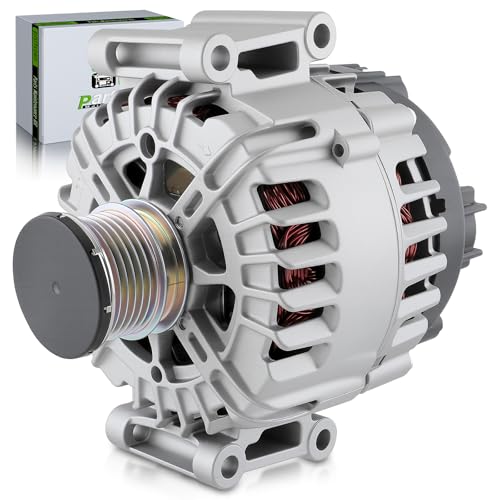
partszen 0009067902 Alternator Fit for Mercedes-Benz C250 1.8L 2012-2015 2013 2014 1.8L 150A 12V CW 6-Groove Clutch Pulley
Replace Part Number: 0009067902, 0009063000, 0141541502
As an affiliate, we earn on qualifying purchases.
As an affiliate, we earn on qualifying purchases.
Unconfirmed Details on Production Volume and Deployment Timeline
It is not yet clear how many motors Mercedes-Benz plans to produce in the initial phase or which specific upcoming models will feature this technology. The company has not provided detailed timelines for full integration across its vehicle lineup, and industry sources suggest that further technical validation may still be ongoing.

High Torque AC Motor + Speed Controller + Gear Box, 250W Single Phase Electric Motor with Gearbox, Variable Speed Motor, Reversible Gear Motor with Control Box, 110V Geared Motor
High torque: induction motor has a torque of 16nm, suitable for applications that require a lot of power,…
As an affiliate, we earn on qualifying purchases.
As an affiliate, we earn on qualifying purchases.
Next Steps for Mercedes-Benz and Industry Adoption
Mercedes-Benz is expected to begin integrating the axial flux motor into select upcoming EV models within the next 12-18 months. Industry analysts will monitor whether the company scales production further and how competitors respond with their own innovations. The automotive sector will also look for real-world performance data once the motors are deployed in customer vehicles.
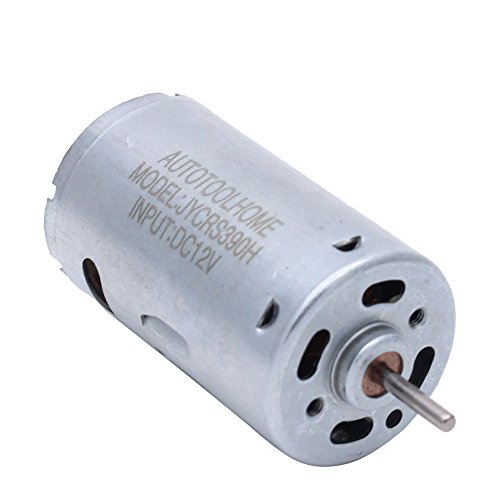
AUTOTOOLHOME 12V DC Motor, Small Electric Motor for RC Car DIY
6-12V Mini DC Motor — This compact brushed DC motor is designed for 6V to 12V applications, making…
As an affiliate, we earn on qualifying purchases.
As an affiliate, we earn on qualifying purchases.
Key Questions
What is an axial flux motor?
An axial flux motor is a type of electric motor that offers a compact design with higher torque density compared to traditional radial flux motors. It enables more efficient use of space and can improve vehicle performance.
How does this development affect Mercedes-Benz’s EV lineup?
The large-scale production of the axial flux motor allows Mercedes-Benz to incorporate more advanced, efficient electric motors into its future models, potentially improving range, acceleration, and overall vehicle dynamics.
When will these motors be used in Mercedes-Benz vehicles?
The company has not specified exact timelines but indicated that the motors are ready for deployment in upcoming EV models within the next 12 to 18 months.
Does this give Mercedes-Benz a competitive advantage?
Yes, the ability to produce advanced axial flux motors at scale could position Mercedes-Benz as a leader in EV propulsion technology, especially in the premium segment where performance and efficiency are critical.
Are other automakers developing similar motors?
Several competitors are exploring axial flux and other innovative motor designs, but Mercedes-Benz’s large-scale production marks a notable milestone in commercial deployment.
Source: IdeaNavigator AI