
TL;DR

Get smart everyday buys delivered free — and shop member deals
- Fast, free delivery on millions of items
- Access to Prime Big Deal Days deals on October 6–7
- Prime Video, Amazon Music and more included
Multi-marketplace resellers face challenges tracking buyer activity across platforms due to data silos. A proposed solution involves a manual buyer ledger to unify buyer history, which could enhance decision-making and customer management.
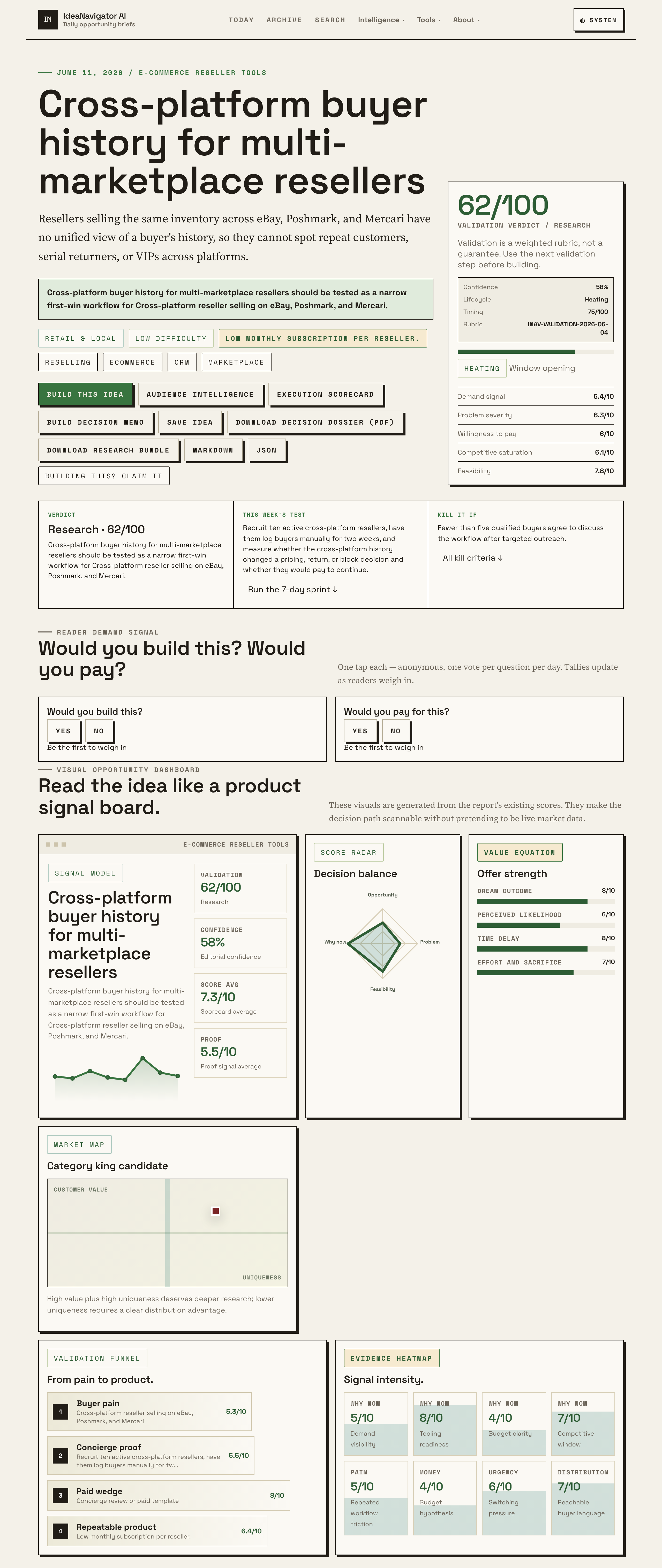
Resellers operating on eBay, Poshmark, and Mercari are beginning to test a manual buyer ledger to track customer activity across platforms, addressing a key data silo issue that hampers their ability to recognize repeat buyers or VIP customers. This initiative aims to improve customer engagement, pricing strategies, and return management for multi-marketplace sellers.
Currently, resellers selling the same inventory across multiple platforms lack a unified view of buyer activity, which limits their ability to identify repeat customers, serial returners, or VIP buyers. This problem arises because each marketplace maintains its own buyer data, with no cross-platform memory layer.
To address this, resellers are testing a manual buyer ledger, where they log each sale with details such as buyer handle, platform, item, and notes. Before responding to offers or making pricing decisions, they search this ledger to review a buyer’s full cross-platform history.
This approach is considered a first-win workflow to validate whether cross-platform buyer history influences reseller decisions, such as pricing adjustments, blocking, or prioritizing certain buyers. The model involves a low-cost monthly subscription for resellers to access this manual system.
Initial validation involves recruiting ten active resellers to log buyers over a two-week period, measuring whether the cross-platform history affects their selling behavior and if they are willing to pay for continued use.
Potential Impact on Multi-Marketplace Reseller Strategies
This development could significantly improve how resellers manage customer relationships across multiple platforms, enabling more targeted marketing, better risk management, and optimized pricing. Recognizing repeat buyers or VIPs across platforms may lead to increased sales and reduced returns, directly impacting reseller profitability.
While the manual ledger is a preliminary step, its success could inspire more automated solutions, potentially transforming cross-platform customer management in the e-commerce resale space.
buyer activity tracking ledger for resellers
As an affiliate, we earn on qualifying purchases.
As an affiliate, we earn on qualifying purchases.
Growing Need for Cross-Platform Buyer Data Integration
As more individual resellers list inventory simultaneously on eBay, Poshmark, and Mercari, the challenge of tracking buyer activity across these platforms intensifies. Currently, each platform retains siloed data, making it difficult to identify repeat customers or serial returners, which are critical for effective customer management and pricing strategies.
This challenge has become more pressing as the resale market expands, with resellers seeking tools to unify buyer data without relying on complex integrations or third-party software. The manual buyer ledger approach is a response to this gap, testing a simple, low-cost workflow to assess its effectiveness before broader adoption.
“The manual buyer ledger is a practical first step to understand cross-platform customer behavior without the need for complex automation.”
— an anonymous researcher
cross-platform buyer management software
As an affiliate, we earn on qualifying purchases.
As an affiliate, we earn on qualifying purchases.
Uncertainties in Effectiveness and Scalability
It is not yet clear whether the manual buyer ledger will significantly influence reseller decision-making or if it can be scaled effectively beyond the initial test group. The duration of the testing phase is limited to two weeks, and long-term impacts remain unconfirmed.
Further, the integration of this manual approach with automated systems or software solutions has yet to be explored, leaving questions about future scalability and efficiency.
manual buyer logbook for multi-marketplace sellers
As an affiliate, we earn on qualifying purchases.
As an affiliate, we earn on qualifying purchases.
Next Steps in Validating Cross-Platform Buyer Tracking
Resellers involved in the initial testing will analyze their data over the next few weeks to determine if cross-platform buyer history influences their pricing, blocking, or customer engagement strategies. Results from this pilot will inform whether a more automated or integrated solution is pursued.
Additionally, broader discussions within the reseller community and potential technology providers may emerge to develop scalable, automated tools based on the manual ledger’s insights.
customer activity spreadsheet for eBay Poshmark Mercari
As an affiliate, we earn on qualifying purchases.
As an affiliate, we earn on qualifying purchases.
Key Questions
How does the manual buyer ledger work?
Resellers log each sale with details like buyer handle, platform, and notes. They then search this ledger to view a buyer’s full activity across all platforms before making sales or response decisions.
Will this approach replace automated cross-platform tools?
Initially, it is a low-cost, manual workflow to validate the concept. If successful, it could lead to the development of more automated solutions tailored for resellers.
What are the main benefits of tracking cross-platform buyer history?
It helps resellers identify repeat buyers, VIP customers, and serial returners, enabling more targeted marketing, better pricing strategies, and reduced risk of fraud or returns.
Is this approach suitable for all resellers?
It is currently being tested by active resellers who list on multiple platforms. Its effectiveness for smaller or less active sellers remains to be seen.
When will broader adoption of this method happen?
Depends on the results of ongoing testing. If the manual ledger proves impactful, expect discussions around automation and wider implementation within the next few months.
Source: IdeaNavigator AI
Fall Picks
fall essentials
As an affiliate, we earn on qualifying purchases.