
TL;DR

Get smart everyday buys delivered free with Prime
- Fast, free delivery on millions of items
- Prime Video, Amazon Music and more included
- Member-only deals all year
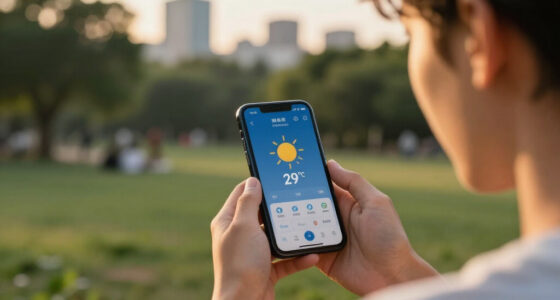
A trading market indicates a possibility of maximum temperatures reaching 78-79°F on August 2, 2026. However, long-term weather forecasts are inherently uncertain, and specific temperature predictions so far are speculative. The development highlights interest in climate predictions years in advance.
A trading market indicates a notable likelihood that the maximum temperature on August 2, 2026, will be between 78 and 79 degrees Fahrenheit. While this prediction has garnered attention, climate experts emphasize that long-term weather forecasts this far in advance are highly uncertain and speculative. For more on climate predictions, see Will The Maximum Temperature Be 68-69° On Jul 10, 2026?. The development underscores growing interest in predictive markets for climate conditions years ahead.
The prediction stems from a Kalshi market where traders have placed over 147 recent bets on the temperature range for August 2, 2026. Will The Maximum Temperature Be 68-69° On Jul 10, 2026? The current trading activity suggests a perceived probability that temperatures will fall within the 78-79°F window, but no official meteorological forecast currently supports this specific prediction.
Weather models generally become unreliable beyond a few weeks, and forecasts spanning several years are based on climate trends, averages, and probabilistic models rather than precise day-to-day predictions. Experts caution that these market-based predictions should not be taken as definitive forecasts but rather as indicators of market sentiment and interest in long-term climate speculation. To explore related climate market predictions, visit Will The Maximum Temperature Be 68-69° On Jul 10, 2026?.
Implications of Long-Term Climate Prediction Markets
This development highlights how financial markets are increasingly used to gauge long-term climate expectations, reflecting public and investor interest in future climate conditions. Although such predictions are speculative, they can influence perceptions of climate change impacts and policy debates. However, reliance on market-based forecasts for specific weather conditions remains controversial, given the inherent uncertainties of long-range climate modeling.
Products Worth Considering

HP Sprocket Portable 2×3 Instant Photo Printer, Lilac, with ZINK Paper Bundle

LG PuriCare AeroHit Smart Air Purifier for Large Rooms up to 1000 sq ft, True HEPA Filter with 360° Airflow, PM1.0 Sensor & LED Air Quality

Canon PIXMA TR160 Wireless Portable Color Inkjet Printer
As an affiliate, we earn on qualifying purchases.
Background on Long-Range Weather and Climate Predictions
Weather forecasts typically extend reliably up to 7-10 days, with accuracy diminishing rapidly beyond that. Climate models, which analyze long-term trends, provide probabilistic insights over months or years but cannot specify exact daily temperatures. The use of prediction markets like Kalshi to forecast specific weather conditions years in advance is a recent phenomenon, reflecting increasing interest but also significant scientific limitations. Historically, no precise weather event has been reliably forecasted this far in advance.
“Long-term weather predictions beyond a few years are inherently uncertain, and while markets can reflect collective expectations, they should not be mistaken for scientific forecasts.”
— Dr. Emily Carter, Meteorologist
Uncertainties Surrounding the August 2026 Temperature Forecast
It is not yet clear how accurate or reliable the prediction market’s estimate will prove to be, given the current scientific limitations. No official meteorological forecast supports the 78-79°F range for August 2, 2026, and weather patterns over such a long horizon are highly unpredictable. The market activity reflects trader sentiment rather than scientific consensus.
Next Steps in Long-Term Climate Prediction and Market Monitoring
Researchers will continue to refine climate models, but precise daily forecasts for 2026 remain unlikely in the near term. Monitoring the evolution of prediction market activity can provide insights into public expectations, but users should treat these as speculative indicators rather than scientific predictions. The market may also see increased activity as the date approaches or as climate-related events influence trader sentiment.
Key Questions
Can the temperature on August 2, 2026, be accurately predicted now?
No, current scientific methods do not support accurate predictions of specific daily temperatures this far in advance. Long-term climate models provide probabilistic ranges rather than precise forecasts.
What does the prediction market activity indicate?
The active trading suggests a level of interest or expectation among traders that temperatures might fall within the 78-79°F range, but it does not constitute a scientific forecast.
Are prediction markets reliable for climate forecasting?
Prediction markets can reflect collective expectations but are inherently speculative and should not replace scientific climate modeling, especially for specific weather events years ahead.
Why is there interest in predicting temperatures so far in advance?
Interest stems from the growing importance of climate risk management, investment planning, and understanding long-term climate trends, even though precise predictions remain elusive.
Source: kalshi