📊 Full opportunity report: Vocal-strain load tracking for working singers on IdeaNavigator AI — validation score, market gap, and execution plan.

Get smart everyday buys delivered free — and shop member deals
- Fast, free delivery on millions of items
- Access to Prime Big Deal Days deals on October 6–7
- Prime Video, Amazon Music and more included
TL;DR
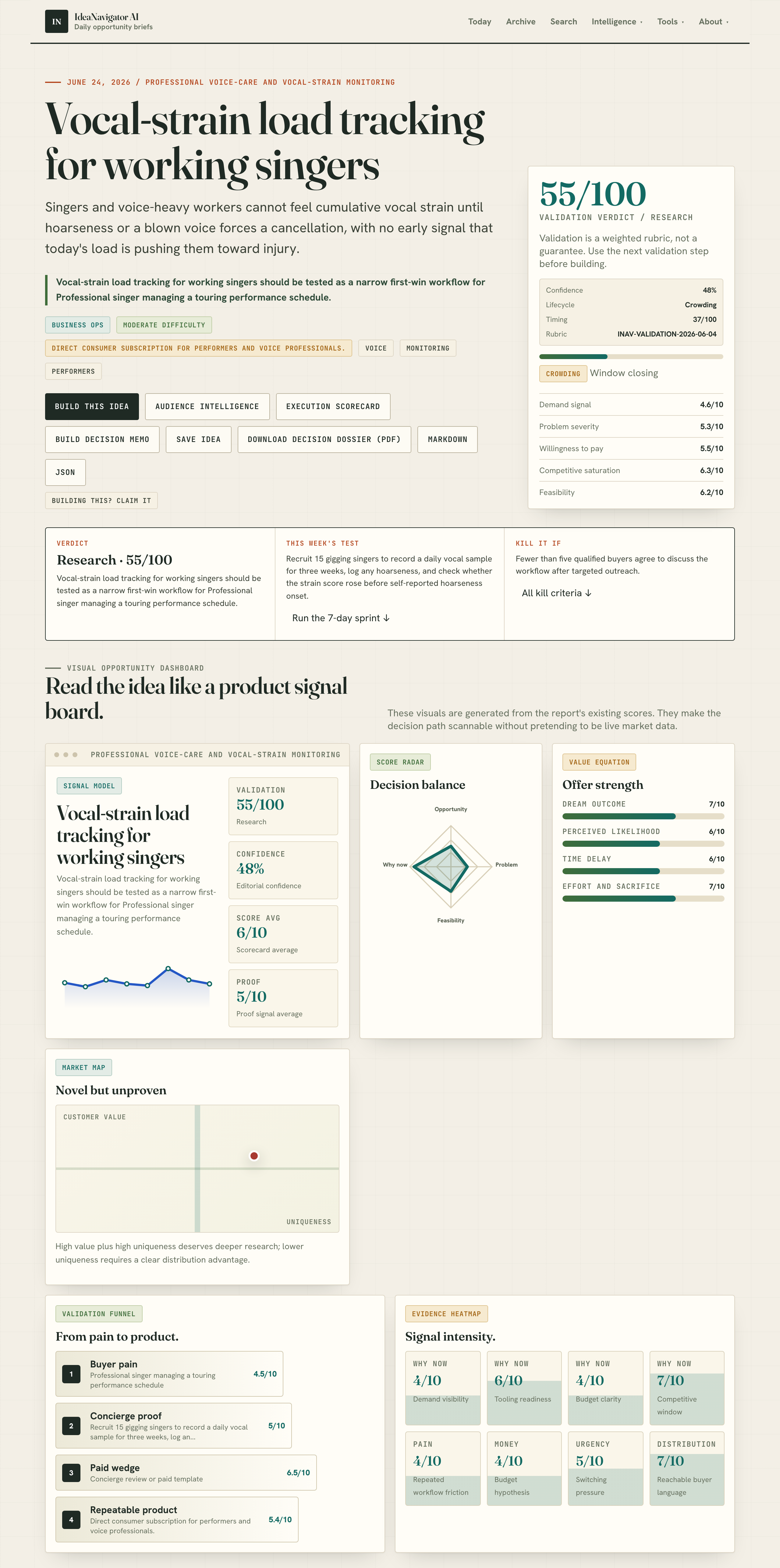
A new vocal strain tracking app for professional singers is being tested, allowing performers to monitor their vocal load after each performance. The goal is to prevent injury by identifying early signs of strain.
A new vocal strain tracking app is being tested with professional singers to help prevent voice injuries during touring schedules. The app records brief vocal samples after each performance, analyzes them for signs of strain, and provides feedback to the user. This development responds to the challenge that singers often cannot feel early signs of vocal fatigue, risking injury or performance cancellations.
The proposed app aims to serve professional singers managing demanding touring schedules by providing an early warning system for vocal strain. The core feature involves recording a short vocal sample after each performance, which the app then analyzes to score cumulative vocal load against the singer’s personal baseline. It flags tone shifts that have historically preceded hoarseness or vocal injury, and suggests warm-up routines or rest periods. The initial testing involves 15 gigging singers who will log daily vocal samples over three weeks, noting any episodes of hoarseness. The goal is to determine whether the app’s strain scores rise before singers report vocal fatigue, validating its potential as a preventive tool.
Potential Impact on Vocal Health Management
This development could significantly improve vocal health management for professional singers, especially those on tour who lack immediate access to voice coaches. Early detection of strain can reduce the risk of injury, improve performance consistency, and decrease cancellations. If validated, the app could become a standard tool for voice professionals, integrating into their routine and enhancing self-care practices. It also reflects a broader trend toward personalized, data-driven health management for performers.
As an affiliate, we earn on qualifying purchases.
Advances in On-Device Vocal Analysis and Self-Management
Recent technological advances have made it feasible to analyze vocal characteristics directly on smartphones, enabling real-time feedback for users. The concept builds on prior research indicating that tone shifts often precede vocal injury, but until now, there has been no accessible, user-friendly tool for performers to monitor their load daily. The idea is particularly timely as gig economy performers increasingly self-manage their schedules without direct supervision from voice specialists. The initiative is in early testing stages, with the goal of validating whether the app’s scoring system correlates with actual vocal fatigue and injury risk.
“Recording and analyzing vocal samples after each performance can provide valuable early indicators of strain, potentially preventing injury before symptoms appear.”
— an anonymous researcher
professional singer vocal health device
As an affiliate, we earn on qualifying purchases.
As an affiliate, we earn on qualifying purchases.
Effectiveness of Strain Detection and User Engagement
It is not yet confirmed whether the app’s scoring system reliably predicts impending vocal injury across diverse singing styles and individual differences. The duration of testing is limited to three weeks, which may be insufficient to establish long-term efficacy. Additionally, user engagement and adherence to recording routines remain uncertain, which could impact the app’s practical utility.
As an affiliate, we earn on qualifying purchases.
Next Steps in Validation and Broader Deployment
The initial testing phase will assess whether the app’s strain scores consistently rise before singers report hoarseness or discomfort. If successful, developers plan to expand the study to a larger group and refine the algorithm. Future steps include integrating user feedback, improving accuracy, and exploring commercial availability for voice professionals. Ongoing research will also examine how well the app performs across different vocal styles and injury histories.
singing performance health monitor
As an affiliate, we earn on qualifying purchases.
As an affiliate, we earn on qualifying purchases.
Key Questions
How does the app analyze vocal strain?
The app records a short vocal sample after each performance, then analyzes features such as tone stability and vocal frequency characteristics to generate a strain score based on the user’s baseline data.
Can this app prevent vocal injuries?
While it cannot guarantee prevention, the app aims to provide early warnings of increasing vocal load, allowing singers to adjust their schedules or warm-up routines to reduce injury risk.
Is this tool suitable for all singing styles?
The current prototype is being tested with professional gigging singers, but further validation is needed to determine its effectiveness across various vocal techniques and genres.
Will this app replace vocal coaching?
No, it is designed as a supplementary tool to assist singers in managing their vocal health between coaching sessions, especially during tours or busy schedules.
When will the app be available to the public?
The app is still in early testing stages; a commercial release depends on validation results and further development, which could take several months.
Source: IdeaNavigator AI
Evergreen bestsellers Picks
bestsellers
As an affiliate, we earn on qualifying purchases.