📊 Full opportunity report: Phone-photo Gauge Reading To Replace Clipboard Rounds on IdeaNavigator AI — validation score, market gap, and execution plan.

Get smart everyday buys delivered free with Prime
- Fast, free delivery on millions of items
- Prime Video, Amazon Music and more included
- Member-only deals all year
TL;DR
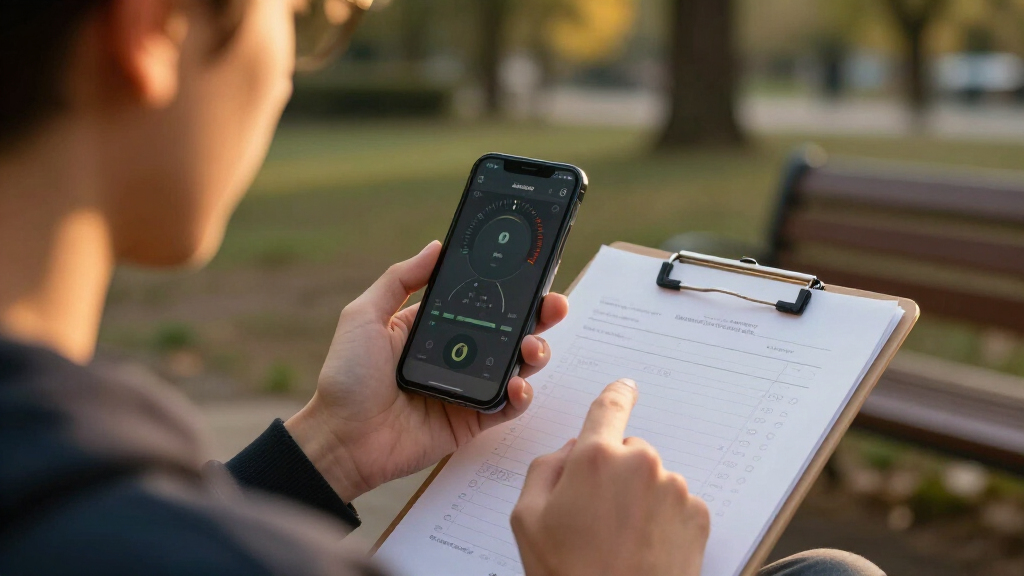
A pilot program is testing the use of phone photos to record analog gauge readings, replacing traditional clipboard rounds. This approach aims to reduce errors and enable better trend analysis without costly sensor retrofits.
An industrial pilot program is testing a new workflow that uses phone photos to record analog gauge readings, replacing traditional clipboard rounds. This initiative aims to improve data accuracy, reduce transcription errors, and enable trend analysis without the need for costly sensor retrofits. The project is being trialed at three facilities, with initial results expected within a month.
The pilot involves technicians photographing each gauge during their routine rounds using a dedicated app that reads the gauge value from the photo, logs it with a timestamp and location, and flags any anomalies immediately. This process aims to eliminate transcription errors common in manual note-taking and improve the timeliness of failure detection. The app compares readings against expected ranges and builds a historical trend for each gauge, providing a new layer of data for maintenance planning.
This approach is being tested as a narrow first step, targeting facilities where technicians already walk past analog gauges regularly. The goal is to validate whether phone-based gauge reading can reliably replace clipboard rounds, with the potential for broader adoption if successful. The project is a collaboration between an unnamed industrial operations software company and participating facilities, with a focus on cost-effective digital transformation.
According to the project team, the initial testing involves parallel rounds—using both traditional clipboard methods and the new phone-photo system—to compare error rates and early anomaly detection. The results will determine whether the new workflow can be scaled across more sites and integrated into existing maintenance processes.
Potential Impact on Industrial Maintenance Accuracy
If successful, replacing clipboard rounds with phone-photo gauge readings could significantly improve data accuracy and operational efficiency in industrial maintenance. Eliminating manual transcription reduces errors that can hide developing failures, potentially preventing costly equipment breakdowns. Moreover, the digital records create a reliable trend history, enabling predictive maintenance strategies that were previously difficult with paper logs.
Furthermore, this method offers a cost-effective solution for legacy equipment lacking IoT sensors. It leverages existing technology—smartphones and sight-line gauges—making digital transformation more accessible for facilities that cannot afford extensive retrofitting. The approach could also streamline maintenance workflows, freeing technicians from manual data entry and enabling real-time monitoring.
Products Worth Considering

HP Sprocket Portable 2×3 Instant Photo Printer, Lilac, with ZINK Paper Bundle

Canon SELPHY CP1500 Compact Photo Printer (White)

Canon imagePROGRAF PRO-1100 17-Inch Professional Wireless Inkjet Photo Printer
As an affiliate, we earn on qualifying purchases.
Legacy Equipment and Digital Data Challenges
Many industrial facilities rely on analog gauges and sight glasses for critical measurements, yet their data collection remains manual and error-prone. Traditional methods involve technicians transcribing readings onto paper, which are then filed away, making trend analysis difficult and delayed. Errors in transcription can obscure early signs of equipment failure, leading to unplanned downtime and higher costs.
While IoT sensors offer a solution, retrofitting legacy equipment with sensors is often prohibitively expensive. As a result, many facilities continue to depend on manual rounds, despite their limitations. Recent advances in computer vision and sight recognition have made it feasible for ordinary phone cameras to reliably read analog gauges, opening new possibilities for digital data collection without hardware upgrades.
This pilot builds on these technological developments, aiming to demonstrate that a simple phone photo workflow can provide reliable, actionable data, bridging the gap between manual and sensor-based monitoring.
Unconfirmed Long-Term Reliability and Scalability
It is not yet clear whether phone-photo gauge reading can consistently match the accuracy of traditional methods over extended periods or across different types of gauges and environments. The pilot’s results are still pending, and questions remain about the workflow’s scalability to larger facilities or more complex measurement setups. Additionally, the robustness of sight recognition in varying lighting or conditions has yet to be fully validated.
Next Steps for Pilot Validation and Broader Adoption
The pilot program will run parallel gauge readings at three facilities for approximately one month, with data analysis comparing error rates and early failure detection. Success could lead to wider deployment and integration into existing maintenance systems. Further development may include refining the app’s sight recognition capabilities and expanding the workflow to other types of measurements. If results are positive, the approach could become a standard part of maintenance routines in industries relying on analog gauges.
Key Questions
How accurate are phone photos compared to manual readings?
Initial tests suggest that phone photos can read gauges reliably, but final validation results are pending after the pilot period.
Will this replace all manual rounds?
Currently, the project is testing a narrow workflow specific to certain gauges; broader replacement depends on pilot success and further validation.
What equipment is needed for this workflow?
Technicians need a smartphone with the dedicated app and access to the gauges during their rounds. No additional hardware is required.
How does this improve maintenance planning?
The digital records and trend histories enable early detection of anomalies, supporting predictive maintenance and reducing downtime.
Are there privacy or security concerns?
The app logs data with timestamps and locations, but details about data security are not specified. Proper safeguards would be necessary for sensitive environments.
Source: IdeaNavigator AI