🔍 Read the full analysis: Inside AI III: The AI Tower — Putting AI To Work, Safely, In Twelve Rooms on ThorstenMeyerAI.com

Get smart everyday buys delivered free — and shop member deals
- Fast, free delivery on millions of items
- Access to Prime Big Deal Days deals on October 6–7
- Prime Video, Amazon Music and more included
TL;DR
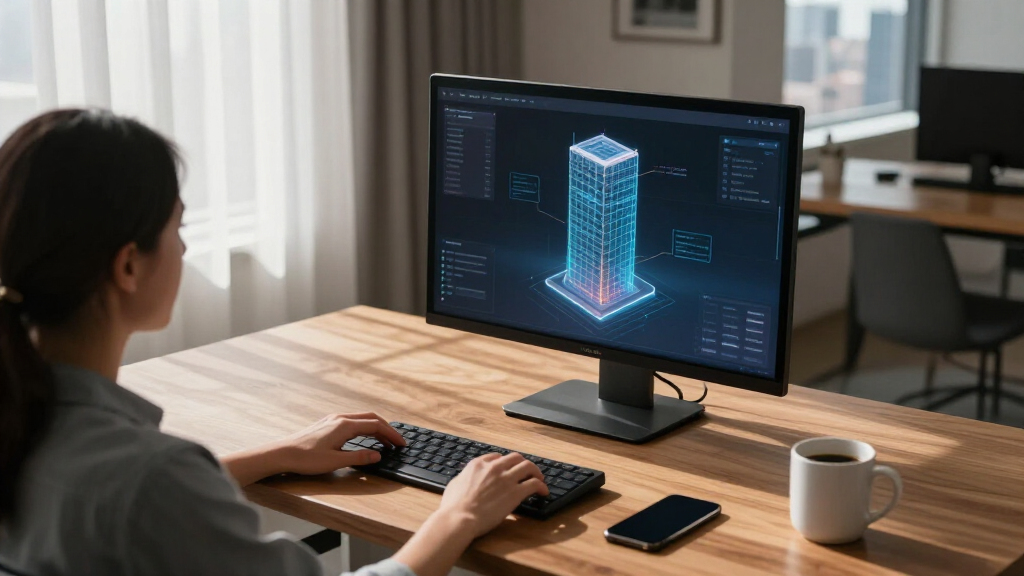
The AI Tower, part of the Inside AI series, showcases twelve rooms demonstrating how AI can be used safely in practical applications. The project runs entirely in browsers, with no tracking, and offers hands-on testing of AI capabilities and limits.
The AI Tower, the latest installment in the Inside AI series, has been launched as a virtual environment designed to demonstrate how AI can be safely integrated into practical workflows. It features twelve rooms, each addressing a specific aspect of AI deployment, from retrieval-based answering to autonomous agents. The project is accessible directly in browsers on phones, tablets, and computers, with no sign-up, cookies, or tracking, making it a transparent resource for users to explore AI’s capabilities and limitations.
The AI Tower was developed by Thorsten Meyer AI, offering a hands-on exploration of twelve core questions about AI functionality. These include how AI answers from personal documents, how to build custom assistants without programming, prompt engineering techniques, what autonomous AI agents can do, and how AI automations operate. Each room provides practical tests and explanations, emphasizing transparency and safety in AI use. The project aims to educate users on the real capabilities and potential pitfalls of AI systems, especially regarding retrieval-augmented generation (RAG), prompt design, and automation workflows.
Confirmed features include the browser-based interface, no sign-up or data collection, and the ability to test AI in controlled scenarios. The platform also clarifies common misconceptions, such as the limits of retrieval accuracy and the fixed nature of automation workflows. It is designed as an educational tool rather than a commercial product, with a focus on safe experimentation and understanding AI’s boundaries. The project is currently live and accessible, with ongoing updates to expand and refine the twelve rooms based on user feedback and technological advances.
Inside AI III · A practical field guide
The AI Tower:
AI at work, safely
Twelve browser-based rooms turn big questions about AI into practical experiments—from document-grounded answers to autonomous agents. Explore the tools, test their limits, and learn where human judgment matters.
Inside the experience
Twelve rooms. Real questions.
Each room focuses on a practical AI capability, explaining how it works and giving visitors a controlled place to try it.
01 / Grounded answers
Ask your documents
See how retrieval-based answering uses supplied material—and why every answer still needs source checks.
02 / Custom assistants
Shape an assistant
Explore how focused assistants can be configured without programming, with clear tasks and boundaries.
03 / Prompt design
Give better instructions
Test how context, examples, and precise requests affect the quality and usefulness of AI responses.
04 / Autonomous agents
Understand agent actions
Examine what agents can do, where they can fail, and why permissions and human oversight matter.
05 / Workflow automation
Map the workflow
Learn how automations connect defined steps—and why fixed workflows do not adapt like a person.
06 / Safety practice
Try ideas safely
Use controlled demonstrations to understand capabilities and pitfalls without putting sensitive data at risk.
A safer way to learn
From curiosity to careful use
The Tower is an educational demonstration for technical and non-technical visitors, not a substitute for specialist training.
Choose a room
Start with a question about a capability or workflow.
Run a test
Explore the concept in a browser-based, controlled setting.
Check the limits
Look for missing context, retrieval errors, and brittle steps.
Keep a human in view
Verify sources and set clear oversight for consequential work.
Why the boundaries matter
Useful does not mean infallible
AI can assist with real tasks, but people need to understand how to verify outputs and control the systems around them.
Retrieval-augmented generation
Ground answers in sources
RAG can help an AI answer from supplied documents. It can still miss relevant passages or produce incorrect claims. Check the original source before relying on an answer.
Evidence · 2024
Errors remain possible
A 2024 Stanford report noted that some legal research tools using RAG gave incorrect answers up to 33% of the time. Performance varies by system and task.
Automation
Defined steps have limits
Automations follow configured workflows. They need testing, clear failure handling, and review when the task or conditions change.
Privacy by design
Explore without an account
The project says it runs in the browser with no sign-up, cookies, or tracking, making it a low-friction place for safe experimentation.
The series continues
Built for discovery, still evolving
The AI Tower extends the Inside AI series, following earlier explorations through virtual museums and engine rooms.
to explore
Future updates may add rooms on AI bias, explainability, and advanced automation, shaped by user feedback and changes in the field. Guided tutorials and case studies are also under consideration. The Tower’s long-term effect on safety practices has yet to be evaluated.
Quick answers
Before you step inside
Can I trust the answers?
Use them as a starting point. Verify claims against original sources, especially when answers come from retrieved documents.
Is it suitable for non-technical users?
Yes. The rooms are designed for accessible exploration and practical tests that do not require programming.
Will it teach me to build AI systems?
It explains AI functions and safety practices. Its main purpose is education and demonstration, rather than technical training.
Are inputs stored or tracked?
The project states that it runs in the browser without cookies, sign-up, or tracking.
What might future rooms cover?
Potential topics include bias, explainability, and advanced automation, guided by feedback and developments in AI.
Who created the AI Tower?
Thorsten Meyer AI developed it as the latest installment in the Inside AI educational series.
Implications for Safe AI Adoption
The AI Tower provides a practical, transparent way for users to understand how AI systems work and where they can go wrong. This is important as AI becomes more integrated into daily workflows, business processes, and decision-making. By demonstrating safe practices—such as verifying sources, setting clear limits for autonomous agents, and understanding automation workflows—the project promotes responsible AI use. It also helps users recognize the current limitations of AI, such as errors in retrieval accuracy and the importance of human oversight, which are critical for avoiding misuse or overreliance.
Ultimately, the AI Tower serves as an educational bridge, helping both technical and non-technical users grasp complex AI concepts in an accessible way. This can foster more informed adoption, reduce risks associated with untested AI deployment, and encourage best practices in AI safety and transparency.
AI development tools for safe automation
As an affiliate, we earn on qualifying purchases.
As an affiliate, we earn on qualifying purchases.
Background on AI Education and Safety Tools
The Inside AI series has previously explored AI through virtual museums and engine rooms, aiming to demystify AI technology for a broad audience. The launch of the AI Tower continues this educational effort by providing an interactive environment focused on practical understanding. Prior developments have highlighted the importance of transparency, safety, and user empowerment in AI deployment. The current project builds on these themes, emphasizing real-world testing and safe experimentation.
Recent studies, such as a 2024 Stanford report, have shown that retrieval-augmented generation systems still produce incorrect answers in a significant percentage of cases—up to 33% in some legal research tools. This underscores the need for user education on AI limitations. The AI Tower aims to meet this need by offering a platform where users can see, test, and understand AI’s functioning firsthand, without risking confidential or sensitive data.
“The AI Tower is designed to make AI understandable and safe for everyone, by providing a transparent environment to explore its real capabilities and limits.”
— Thorsten Meyer
As an affiliate, we earn on qualifying purchases.
Unanswered Questions About AI Tower’s Impact
While the AI Tower offers a clear, accessible platform, it is not yet confirmed how widely it will influence user understanding or change AI safety practices in the field. The long-term impact on responsible AI adoption remains to be seen, and the platform’s effectiveness in reducing misuse or misunderstandings is still under evaluation. Additionally, as AI technology evolves rapidly, ongoing updates will be necessary to keep the content current and relevant.
As an affiliate, we earn on qualifying purchases.
Future Developments and User Engagement
The developers plan to expand the AI Tower with new rooms, covering emerging topics such as AI bias, explainability, and advanced automation techniques. They also intend to collect user feedback to improve the platform’s clarity and educational value. Further, the team may introduce guided tutorials and case studies to deepen understanding. Monitoring how users interact with the platform will help assess its impact on AI safety awareness and responsible use in practice.
As an affiliate, we earn on qualifying purchases.
Key Questions
Can I trust the AI answers provided in the Tower?
The platform emphasizes understanding AI’s limitations, especially regarding retrieval accuracy. Users are encouraged to verify answers with original sources and be aware of potential errors.
Is the AI Tower suitable for non-technical users?
Yes, the platform is designed to be accessible for all users, with simple interfaces and practical tests that do not require programming knowledge.
Will the AI Tower teach me how to build AI systems?
It provides insights into AI functions and safety practices but is primarily an educational demonstration rather than a technical training platform.
Are my data or inputs stored or tracked?
No, the AI Tower runs entirely in your browser without cookies, sign-up, or tracking, ensuring user privacy and confidentiality.
What topics will future rooms cover?
Future updates may include topics like AI bias, explainability, and advanced automation, based on user feedback and technological developments.
Source: ThorstenMeyerAI.com
Fall Picks
fall essentials
As an affiliate, we earn on qualifying purchases.