
🔍 Read the full analysis: AI Data Center Boom: Who Pays For The Sites, Leases And Electricity? on ThorstenMeyerAI.com

Get smart everyday buys delivered free with Prime
- Fast, free delivery on millions of items
- Prime Video, Amazon Music and more included
- Member-only deals all year
TL;DR
Amazon, Microsoft, Alphabet and Meta reported about $202 billion in property and equipment spending in the third quarter of 2026, more than double the year-earlier total, according to a calculation based on company filings. Their financing mix includes operating cash, debt, leases, partnerships and equity, with future lease payments and power commitments creating obligations that may last longer than the servers they support.
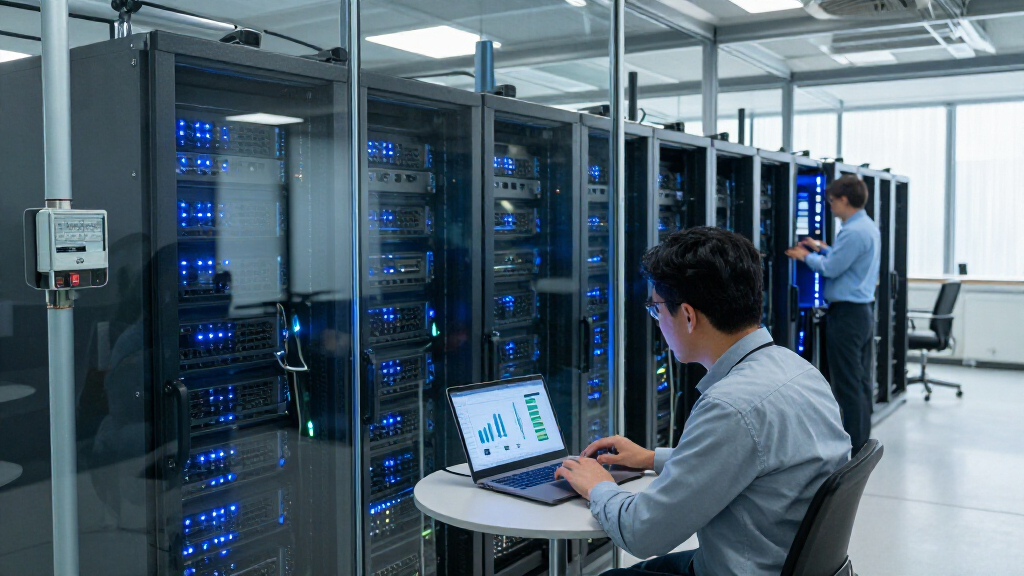
Amazon, Microsoft, Alphabet and Meta spent about $202 billion on property and equipment in the three months through September 2026, more than twice their roughly $97 billion total a year earlier, according to a calculation from their cash-flow statements. The companies are meeting the rising cost of AI data centers and equipment with a mix of cash, borrowing, leases, partnerships and equity, spreading some obligations beyond their own balance sheets.
The spending figures reflect company filings and include property and equipment, not just AI infrastructure. Amazon reported $77.3 billion in quarterly spending, Alphabet $51.4 billion, Microsoft $39.4 billion in cash spending, and Meta $33.9 billion. Microsoft put its quarterly capital spending at $45.2 billion when new finance leases were included. The source report says Amazon attributed its increase primarily to AI investment, while the other companies are also building broader infrastructure.
The financing activity has become more visible. Meta said on October 26 that it planned to fund AI investments through “a balanced mix of operating cash flow, investment-grade debt, strategic partnerships, and equity capital.” The report says Meta sold $25 billion in stock and $12.5 billion in preferred shares during the week; Microsoft issued $25 billion in bonds, including debt with a maturity in 2066; and Amazon disclosed a loan facility of up to $80 billion secured by servers it plans to buy.
Cash generation did not keep pace with spending for three of the four companies, according to the report’s comparison of quarterly figures. Amazon, Alphabet and Meta spent more on property and equipment than their businesses generated in operating cash during the quarter. Microsoft generated $58 billion in operating cash and spent $39.4 billion in cash on property and equipment. Those comparisons are not a complete measure of each company’s finances: they exclude other cash uses, financing arrangements and differences in how spending is reported.
Infographic 01 · One quarter, four companies
The bill doubled. The cash did not.
What Amazon, Microsoft, Alphabet and Meta paid for buildings, servers and chips from July to September 2026, set against the cash their businesses brought in.
AmazonQ3 2025: $35.1B spent
Spent $34.9B more than came in
AlphabetQ3 2025: $24.0B spent
Free cash flow −$9.1B
MicrosoftQ3 2025: $19.4B spent
$18.6B left over
MetaQ3 2025: $18.8B spent
Free cash flow −$2.1B
Cash purchases of property and equipment as reported; not all of it is for AI (Amazon also builds warehouses). Gaps for Amazon and Microsoft are my arithmetic; free cash flow for Alphabet and Meta as the companies report it. Microsoft’s quarter is its fiscal Q1 2027 (July–September 2026).
Sources: Amazon results, 29 Oct · Microsoft 10-Q, 28 Oct · Alphabet results, 28 Oct · Meta results, 21 Oct. Debt raised: cash flow statements, nine months 2026.
Powered by Thorsten Meyer AI
How AI Infrastructure Costs Spread
The financing mix matters because building the infrastructure is not the only cost. A data center needs land, buildings, servers, chips and reliable electricity. When companies borrow, rent facilities or work with separate property owners, investors and counterparties take on some exposure to whether the facilities earn enough to cover their costs.
The source report calculates that the four companies had about $1.02 trillion in future lease payments for leases not yet started as of September 30, based on its sum of company filings. That figure is a reported estimate of future obligations, not a bill due immediately. The report also highlights different time horizons: servers may be written off over five to six years, while data-center leases can run for up to 20 years and power contracts for 15 to 20 years. If demand or AI revenue grows more slowly than expected, the parties financing or supplying the infrastructure could face pressure over a longer period.
For electricity customers, the potential relevance is local and depends on how new facilities affect power demand, grid investment and utility arrangements. The supplied material does not establish that household bills have risen because of these projects. It does identify electricity users, investors and pension funds among groups that could be exposed to costs or risks, depending on contracts and financing structures.
Products Worth Considering

Apple MacBook Air 13-inch with M5 chip, 16GB memory, 1TB SSD, and 12MP Center Stage camera (Midnight)

Apple MacBook Pro 14 2021 with M1 Max, 64GB RAM, 2TB SSD, Silver

Dell UltraSharp 32 U3226QER 4K Thunderbolt Hub Monitor
As an affiliate, we earn on qualifying purchases.
From Cash-Funded Builds to Borrowing
The source report describes a shift from a period when large technology companies could fund data-center construction from profits generated by advertising, software and online commerce. In 2026, it says, the scale of investment has led companies to use several financing methods at once. The reported quarterly spending total of about $202 billion compares with about $97 billion in the same quarter a year earlier; both figures are the author’s sum of the four companies’ statements, not a single company-reported industry statistic.
The report also points to long-term debt raised by Amazon, Alphabet and Meta, and to financing at companies outside the largest platforms. It cites GPU cloud provider CoreWeave as an example, saying its senior notes carry interest rates of 8.5% to 9.75%. That comparison illustrates that financing terms can vary across the sector; it does not show that all data-center projects face the same borrowing costs or risk.
Capital spending forecasts in the source suggest the build-out is expected to continue. Amazon projected about $220 billion in cash capital spending for 2026; Alphabet maintained guidance of $195 billion to $205 billion and expected a significant increase in 2027; Microsoft expected about $170 billion for calendar 2026; and Meta forecast $135 billion to $145 billion for 2026, including finance-lease payments. These are company expectations cited in the report, not completed spending totals.
Who Ultimately Carries the Risk
The figures describe spending and obligations, but they do not establish what returns the investments will produce. Future AI revenue, utilization and power costs remain uncertain, and the source material does not provide a consistent forecast across all four companies for when individual data centers will become profitable.
The approximately $1.02 trillion lease figure is the source author’s sum of four filings and covers future payments for leases that had not started by September 30. The supplied material does not list each lease’s terms, identify every property owner, or show how much of the total is tied specifically to AI rather than other data-center needs. Nor does it provide a complete accounting of power-purchase commitments across the four companies.
It is also unclear how much risk would fall on technology companies, landlords, lenders, utility providers or customers if demand falls short. That depends on contract terms, financing arrangements and local electricity systems. The source report raises these as possible pressure points; it does not document a current loss or establish that consumers are already paying more because of AI data centers.
Watch Spending and Contract Disclosures
The next evidence will come from company results and filings showing whether capital spending follows the published 2026 forecasts and whether operating cash continues to cover a smaller share of investment. Readers can also watch for updates to lease obligations, debt issuance and financing partnerships, along with details about the facilities and equipment those arrangements support.
For the wider impact, future disclosures about power contracts, grid connections and data-center construction will help clarify how long-term electricity costs are allocated. Until those details are available, the scale of announced investment is clearer than the eventual returns or the distribution of risk among companies, investors and electricity users.
Key Questions
How much did the four companies spend in the third quarter of 2026?
Amazon, Microsoft, Alphabet and Meta spent about $202 billion combined on property and equipment from July through September, according to the source author’s calculation from company cash-flow statements. The same calculation puts the total at about $97 billion in the year-earlier quarter.
How are the companies financing data centers?
The report identifies operating cash, bonds and loans, leases, partnerships and equity as funding sources. The mix differs by company and project.
What does the $1.02 trillion lease figure mean?
It is the source author’s sum of future payments for leases, mostly for data centers, that had not started by September 30, 2026. It is a total of future commitments, not an immediate payment, and the supplied material does not break it down lease by lease.
Does the spending prove AI data centers are a bubble?
No. Spending and financing figures alone do not establish whether investment will earn adequate returns. The central uncertainty is whether future revenue and demand will support long-term costs for servers, buildings, leases and electricity.
Are electricity customers already paying more because of these projects?
The supplied material does not show that household electricity bills have risen because of AI data centers. The effect on customers depends on local grid investment, utility arrangements and power contracts, details that remain incomplete in the report.
Source: ThorstenMeyerAI.com