
🔍 Read the full analysis: Is The AI Boom Still A Tailwind For US Growth? on ThorstenMeyerAI.com

Get smart everyday buys delivered free with Prime
- Fast, free delivery on millions of items
- Prime Video, Amazon Music and more included
- Member-only deals all year
TL;DR
The Bureau of Economic Analysis estimated that US real GDP grew at a 3.4% annual rate in the third quarter of 2026, with consumer spending the largest contributor. Computers and software together added 1.09 percentage points, but imported equipment also weighed on measured domestic growth; the advance estimate is subject to revision.
The US economy grew at a 3.4% annual rate in the third quarter of 2026, according to the Bureau of Economic Analysis’ advance estimate, with consumer spending leading and computer and software investment adding 1.09 percentage points. The figures show that technology spending was a substantial part of growth, but they do not establish how much of that investment was specifically for artificial intelligence or produced within the United States.
Consumer spending contributed 2.52 percentage points to the reported growth, while fixed investment added 1.66 points. Within business investment, purchases of computers and peripheral equipment grew at a 66.7% annual rate and contributed 0.72 percentage points. Software added another 0.23 points; other information-processing equipment contributed 0.14. Together, those categories accounted for about 32% of the quarter’s 3.4% growth, based on the BEA figures cited in the source material.
The headline rate is annualized: the actual increase in economic output from the second to the third quarter was 0.8%. The BEA’s contribution figures describe how different spending categories added to or subtracted from the overall rate; they are not separate growth rates. The advance estimate is the first of three and uses some estimates where September data were not yet available.
Imports complicate the picture. Because GDP counts domestic production, imported goods are subtracted from the calculation. Imports rose at a 19.7% annual rate in Q3, with capital goods among the largest contributors to the increase. The source’s author estimates imported computer equipment reduced growth by about 1.1 percentage points, compared with a 0.72-point contribution from business computer purchases. That estimate is an author calculation, not a separate BEA measure of AI’s net contribution.
Infographic 01 · US GDP, July to September 2026
Where the 3.4% came from
Consumers carried most of the growth. Equipment, software and a big inventory build added the rest, and a surge in imports took a large slice back.
Contributions to growth, in percentage points
Each bar is one kind of spending. Bars right of the line added to growth, bars left of it subtracted. Together they make the 3.4%.
- Consumer spendinghealth care, restaurants and hotels, medicines+2.52
- Equipmentof which computers and peripherals +0.72+1.16
- Software and researchintellectual property; software alone +0.23+0.47
- Business buildingsstructures+0.15
- Housingresidential investment−0.12
- Inventoriescompanies stocking up+1.61
- Governmentmostly federal+0.90
- Exportsled by petroleum products−0.68
- Importssubtracted in GDP; led by capital goods−2.64
Sum: +3.4% (details do not add exactly because of rounding)
Advance estimate, the first of three; the second follows on 25 November 2026. “Annual rate” means the quarterly pace extended to a full year.
Sources: BEA, GDP advance estimate Q3 2026, 29 Oct, Table 1.5.2 (contributions, expanded detail) · AP, 29 Oct (consensus).
Powered by Thorsten Meyer AI
AI Investment and Domestic Growth
The figures matter because rapid spending on computing equipment and software is now large enough to shape the quarterly growth picture. The source’s calculations put combined investment in information-processing equipment and software at 1.77 trillion dollars at an annual rate, equal to 5.3% of GDP. That share was 4.5% in the second quarter of 2025, according to the same analysis. The BEA does not identify a distinct AI category, however, so these figures capture a broader set of technology purchases, not AI spending alone.
There is also a difference between buying equipment and producing it at home. If servers and components are imported, their purchase can support investment while their foreign production is reflected in the import subtraction. The resulting GDP contribution is not a direct tally of the value of AI projects, domestic jobs, or productivity gains. The source’s estimate of the import effect is one interpretation of the published tables, and its method is not detailed in the supplied material.
For workers and communities, the construction boom is more visible than broad hiring gains in the figures provided. Census Bureau data cited by the source put private data-center construction at an $85 billion annual rate in August, 73% above a year earlier. Factory construction was down 20% over that period. US employers added 29,000 jobs in September, according to the Bureau of Labor Statistics, below the prior year’s monthly average of 45,000. These measures cover different activities and time periods, so they do not prove that data-center spending caused the employment pattern.
If investment slows, the effects could be uneven. Suppliers, construction contractors, power projects and lenders tied to data-center development may be more exposed than the broader economy. Investors whose savings are concentrated in technology stocks could also face market risk. At the same time, fewer imported servers would reduce the import subtraction, so a slowdown in equipment purchases would not translate mechanically into an equal-sized fall in GDP growth.
Products Worth Considering
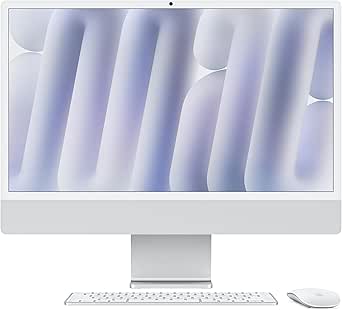
Apple iMac 2024 All-in-One Desktop with M4 Chip, 24‑inch Retina Display, 16GB Unified Memory, 256GB SSD, Silver

Dell XPS 13 9350 Copilot+ Laptop, 13.4-inch 120Hz Display, Intel Core Ultra 7 256V, 16GB RAM, 512GB SSD, Ubuntu Linux 24.04 LTS

Dell XPS 13 9350 Laptop, 13.4 FHD+ Display, Intel Ultra 7 256V, 16GB DDR5, 1TB SSD
As an affiliate, we earn on qualifying purchases.
What the GDP Tables Capture
The BEA reported that growth accelerated from 2.2% in Q2 to 3.4% in Q3, measured at annual rates. A FactSet survey cited by the Associated Press had put forecasters’ expectation at 3%. Consumer spending grew at a 3.8% annual rate, with spending on health care, restaurants and hotels, and prescription drugs among the areas identified in the source.
Technology’s role depends on which categories are counted. Looking only at computers and peripheral equipment gives a 0.72-point contribution. Adding software and other information-processing equipment raises the figure to 1.09 points. The source’s author calculates that the latter two broad categories averaged about 45% of GDP growth over the four quarters ending in September 2026. That is a retrospective calculation from BEA tables, not an official BEA measure called “AI growth.”
Other components also shaped the quarter. Inventories added 1.61 points and government spending added 0.90, while exports subtracted 0.68 points and imports subtracted 2.64. These contributions help explain why a strong growth headline does not point to a single driver. A Friday market drop followed the GDP release: the source reports that the Nasdaq fell 2.9% after TechCrunch described emerging strains in AI spending. That sequence does not by itself show that the market decline was caused by the GDP figures or establish that AI investment has peaked.
“About a third came from computers and software.”
— Thorsten Meyer, citing the BEA tables
Limits of the AI Growth Estimate
The GDP accounts contain no dedicated AI spending line. Computers, software and data-center construction are proxies that include non-AI activity, while some AI-related purchases may sit in other categories. The available figures therefore cannot isolate AI’s precise contribution to Q3 output or establish how much value was generated in the United States.
The import calculation is also an estimate supplied by the article’s author; the source material does not provide its full methodology. The Q3 GDP release is preliminary, and its September estimates rely partly on assumptions. It is not yet clear whether later data will materially change the technology investment, import or overall growth figures. Nor do one quarter’s spending data or a one-day stock-market decline settle whether the broader AI investment cycle is slowing.
November GDP Revision to Watch
The next scheduled milestone is the BEA’s second estimate on November 25. It will incorporate additional information and may revise Q3 GDP and its component contributions. Readers can then compare updated figures for computer equipment, software, imports and consumer spending rather than treating the advance estimate as final.
Evidence on the durability of the build-out will also come from subsequent investment, construction and labor data. The August data-center construction estimate and September employment report offer different snapshots, not a complete account of the sector’s reach. Whether technology investment continues to support growth, and how much of that support accrues to domestic producers and workers, remains an open question.
Key Questions
How fast did the US economy grow in Q3 2026?
The BEA’s advance estimate put real GDP growth at a 3.4% annual rate. The actual quarter-to-quarter increase was 0.8%.
How much did computers and software add to growth?
Computer and peripheral equipment, software, and other information-processing equipment together contributed 1.09 percentage points, or about 32% of the reported 3.4% annualized rate, based on the source’s calculation.
Does the GDP report show that AI caused this growth?
No. The BEA does not report a separate AI category. Computer, software and construction figures are proxies and include activity that may not be AI-related.
Why did imports reduce measured GDP growth?
GDP measures production within the United States, so imported goods are subtracted. Imports rose at a 19.7% annual rate in Q3. The source author estimates that imported computer equipment had a sizable negative contribution, but that estimate is not an official BEA AI measure.
When will the GDP estimate be updated?
The BEA’s second estimate is scheduled for November 25, 2026. The Q3 advance estimate may be revised as more data become available.
Source: ThorstenMeyerAI.com