📊 Full opportunity report: The Benefit Of Physical Ratings In Trip Planning on IdeaNavigator AI — validation score, market gap, and execution plan.

Get smart everyday buys delivered free with Prime
- Fast, free delivery on millions of items
- Prime Video, Amazon Music and more included
- Member-only deals all year
TL;DR
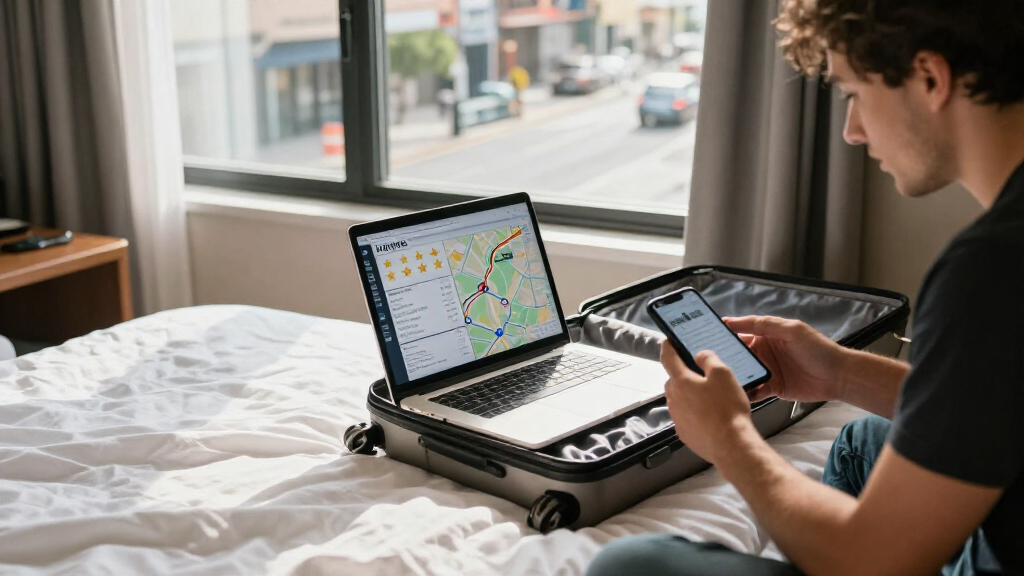
A proposed trip-planning service would give tour operators a standardized way to describe walking distance, stairs, terrain and rest options before guests book. The concept has not been reported as a launched product or completed pilot; its suggested first test is to rate 30 excursions across two operators and track outcomes over one season.
IdeaNavigator AI has proposed a pilot for standardized physical-demand ratings on tours and shore excursions, aimed at helping travelers understand walking, stairs and terrain before booking. The concept targets tour operators whose customers skew 60 and older, but no completed trial, operating product or measured results are reported.
The proposed ratings would replace broad labels such as “moderate” or “some walking” with details travelers can use to judge whether an itinerary suits them. The profile would include total walking distance, the longest uninterrupted walk, stair count, steepest gradient, surface type, time spent standing, access to seated rests and step-free alternatives. The intended users include people who can walk but may have limits related to mobility, heart, lung or joint conditions.
Under the suggested minimum product, a guide would record a real tour run using a phone app, a GPS track and a stair counter. The operator could then display an embeddable rating badge and let prospective guests filter tours on booking pages. A related “can I do this?” self-check is proposed for travelers. These are product ideas, not features shown to be available now.
The business model under consideration is a recurring subscription priced according to the number of rated tours, alongside a one-time fee to assess an existing catalog. To test the idea, the proposal recommends rating 30 excursions for two operators with older customers, displaying the profiles for one season and comparing selected operating and customer measures with the previous season.
Physical ratings before booking
A proposed service would describe the physical demands of tours in practical detail. No product launch or pilot results have been reported.
What travelers could see
The proposed profile replaces vague effort labels with details guests can compare with their own abilities.
Distance and duration
Total distance, longest uninterrupted walk and time spent standing.
Steps and terrain
Stair count, steepest gradient and surface type, such as uneven cobblestones.
Rest and alternatives
Whether seated rests and step-free options are available.
How the proposed pilot works
Guides would record real tours, then operators would display the resulting profiles.
Use a phone app, GPS track and stair counter to capture physical-demand details.
Place rating badges on booking pages for one season.
Compare incidents, stragglers, refunds and strenuous-tour review mentions with the prior season.
Potential value for both sides
- Judge itinerary demands before booking.
- Discuss suitability using specific route details.
- Set clearer expectations with guests.
- Test whether better information relates to fewer mismatches and complaints.
What remains unproven
The proposal gives a test plan, but no trial results, participating operators, rating thresholds or measurement method.
Clearer Effort Details Before Booking
For travelers, the proposed profiles could make a practical difference between choosing an excursion with confidence and discovering its demands only after arrival. A distance figure alone would not tell the whole story: 90 stairs, uneven cobblestones, a steep slope or prolonged standing may affect someone differently from a level walk with frequent places to sit. Listing several measures could help guests weigh those demands against their own abilities.
Operators may also have reasons to improve how tours are described. The proposal identifies on-tour incidents, guides slowing down for stragglers, refund requests and negative reviews as possible costs when expectations and actual conditions do not match. Those are risks identified by the proposal, not findings from a completed evaluation. A pilot could determine whether better information is associated with changes in those outcomes.
More precise descriptions could also help staff discuss suitability without relying on a single vague category. However, a rating would describe the physical demands recorded on a particular itinerary; it would not determine whether a tour is safe or suitable for every individual. Personal capacity varies, and conditions can change between visits.
Products Worth Considering

FLEXISPOT Electric Adjustable Workbench, 55 x 28 Inches, White

Logitech MX Master 4 Ergonomic Wireless Mouse with Haptic Feedback, Graphite

Dell 27 Plus QHD Monitor, 27-inch, 144Hz, Ash White
As an affiliate, we earn on qualifying purchases.
Accessibility Rules and Existing Data
The proposal points to the European Accessibility Act, which has applied since June 28, 2025. It says the law requires in-scope air, bus, rail and waterborne passenger services to provide information about accessibility of vehicles, surrounding infrastructure and the built environment. That is relevant regulatory context, but it does not establish that a specific trip-rating product is required or that tour operators generally must use the proposed measures.
It also cites Wheel the World’s $11 million Series A financing in February 2026 as an indication of investment in accessibility data. The proposal distinguishes that company’s wheelchair-oriented property measurements from the intended focus here: graded walking effort across an entire itinerary for travelers who can walk, but may have limits. The financing is not evidence that demand for this particular rating system has been tested.
The suggested first customers are deliberately narrow: river cruise lines, alumni travel programs and small-group tour companies whose guests skew older, as well as shore-excursion sellers. Starting with operators serving this audience would let a trial focus on a defined set of products rather than attempt to standardize trip information across the entire travel industry.
Pilot Results Have Not Been Reported
No pilot results are provided. It is not known whether operators have agreed to participate, whether the proposed app or booking-page tools are being developed, or when a trial might begin. The recommendation to rate 30 excursions across two operators is a proposed validation plan, not a report that those ratings have been completed.
The proposal also does not provide a rating scale, thresholds for categories such as light or strenuous, or a method for handling differences in route, pace, weather and temporary access conditions. It remains unclear how consistently different guides would measure features such as standing time or the steepest gradient, and whether travelers would find the profiles easy to interpret.
Nor are there baseline figures for incidents, refunds or reviews mentioning that a tour was too strenuous. Without those counts and a comparison method, the suggested season-over-season test cannot yet establish the size of any effect. Even if indicators change, other factors may contribute; the proposal does not describe a control group or a completed assessment.
A Two-Operator Seasonal Test
The next step described is a field test with two operators and 30 existing excursions. Guides would record the physical-demand details on actual tours, and operators would put the resulting profiles on their booking pages for one season. The proposed evaluation would compare incident reports, guides’ reports of stragglers, refund requests and post-trip review mentions of tours being “too strenuous” with the prior season.
No launch date, participating businesses or decision point is specified. If the trial proceeds, its usefulness will depend on whether measurements can be collected consistently and whether operators can maintain accurate profiles when routes change. Until results are available, the ratings remain a proposed planning tool, not a proven way to reduce incidents or improve customer outcomes.
Source: IdeaNavigator AI
Key Questions
Are physical-demand ratings already available for tours?
The information describes a proposed product and pilot, not a confirmed service available to bookers. No launch or participating operators are identified.
What would a tour’s physical-demand profile include?
The proposed profile lists walking distance, longest continuous walk, stairs, steepest gradient, surface, standing time, seated-rest options and step-free alternatives.
Who is the proposed service intended to help?
It is aimed at travelers who can walk but may have limited stamina or mobility, including some older people and people with heart, lung or joint limitations. It is also intended for operators serving older customers.
How would the idea be tested?
The suggested test is to rate 30 excursions for two operators, show the profiles for one season and compare selected operating and review measures with the prior season. No results have been reported.
Source: IdeaNavigator AI