TL;DR

Get smart everyday buys delivered free with Prime
- Fast, free delivery on millions of items
- Prime Video, Amazon Music and more included
- Member-only deals all year
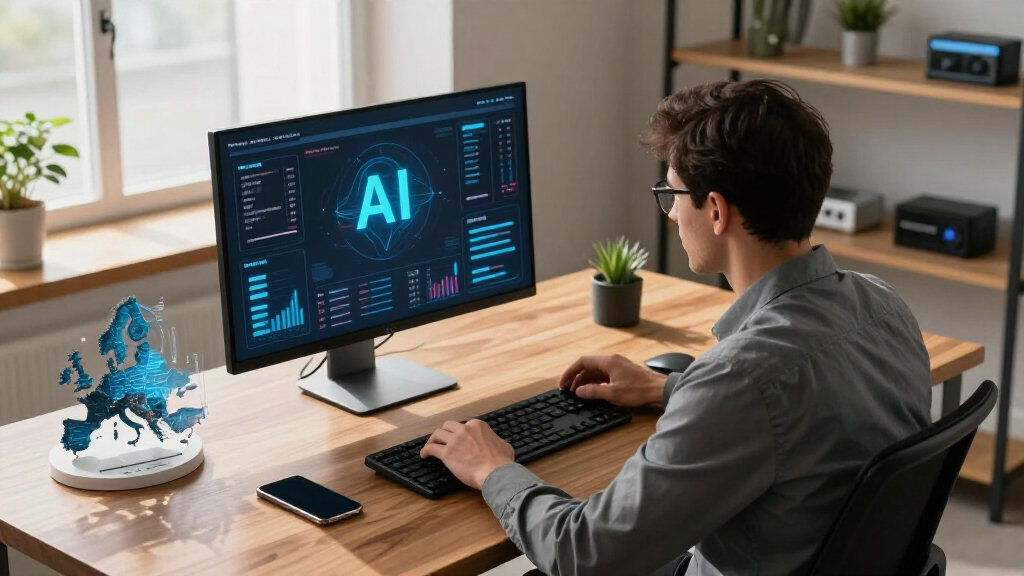
Mistral, a European AI startup, announced a $14 billion plan to build sovereign AI infrastructure and models, backed by recent funding rounds and strategic partnerships. This move aims to establish European technological independence amid global competition.
Mistral, the European AI startup, has announced a $14 billion sovereignty plan to develop a continent-specific AI ecosystem, backed by recent funding and strategic infrastructure investments. This move positions Europe to challenge US dominance in AI and aims to establish technological independence, making it a significant development for the region’s digital future.
The core of Mistral’s plan involves a $14 billion investment to build open-weight models, European AI infrastructure, and data sovereignty solutions. The company’s last confirmed valuation was approximately €11.7 billion (~$13.5 billion), following a €1.7 billion Series C funding round in September 2025, led by Dutch lithography firm ASML, which holds around 11% stake. Reports indicate ongoing discussions for an additional $3.5 billion raise at a valuation exceeding $20 billion.
Mistral’s revenue growth has been rapid, with an estimated annual recurring revenue (ARR) reaching roughly $400 million by early 2026, up from about $20 million a year earlier. CEO Arthur Mensch has targeted $1 billion ARR by the end of 2026. The company’s revenue model includes API services, enterprise contracts, and consumer tiers, emphasizing a strategy rooted in sovereignty and open models.
Strategically, Mistral emphasizes European jurisdiction, data residency, and infrastructure independence. It is developing Mistral Compute, a GPU cloud backed by NVIDIA and Bpifrance, with a €4 billion data center plan across France and Sweden, some nuclear-powered, aimed at reducing reliance on US cloud providers. The company acquired infrastructure firm Koyeb to bolster this ecosystem and ships open-weight models to foster developer adoption and paid usage.
Implications for European AI Autonomy and Industry
This development signals a strategic push by Europe to establish technological sovereignty in AI, reducing dependence on US and Chinese models and infrastructure. With significant funding, infrastructure investments, and political backing, Mistral aims to create a resilient European AI ecosystem. While the initiative faces challenges in model capability and infrastructure independence, its success could reshape Europe’s position in global AI leadership and influence future industrial policy, emphasizing sovereignty as a key driver for innovation and security.European AI infrastructure hardware
As an affiliate, we earn on qualifying purchases.
As an affiliate, we earn on qualifying purchases.
Europe’s Growing AI Sovereignty Ambitions and Mistral’s Role
Europe has been increasingly investing in AI as part of its broader industrial and digital sovereignty agenda, with France and Germany leading efforts. Mistral emerged as a key player, leveraging European data policies, political support from leaders like Macron, and strategic partnerships such as ASML’s investment. The company’s focus on open-weight models and infrastructure independence aligns with Europe’s goal to develop a self-sufficient AI ecosystem, contrasting with the US-dominated cloud and model landscape. Prior to this announcement, Europe’s AI efforts faced criticism over capability gaps and infrastructure reliance, making Mistral’s plans a notable step toward addressing these issues.“Our goal is to democratize access to the best AI outside of centralized control, ensuring Europe’s technological sovereignty and fostering innovation.”
— Arthur Mensch, CEO of Mistral
As an affiliate, we earn on qualifying purchases.
Unresolved Challenges and Limitations of Mistral’s Sovereignty Strategy
It remains unclear whether Mistral’s current models can match the performance of US or Chinese frontier models, as third-party evaluations suggest they lag behind the leading edge. Additionally, the partial reliance on American hardware and cloud infrastructure complicates the sovereignty narrative, raising questions about the true independence of the ecosystem. The company’s ability to sustain rapid growth and compete in a global market with larger players is also uncertain, given its current scale and model capabilities.As an affiliate, we earn on qualifying purchases.
Next Steps in Mistral’s Growth and European AI Ecosystem Development
In the coming months, Mistral is expected to finalize its additional funding round, further expand its infrastructure projects across Europe, and accelerate model development. The company will also likely face scrutiny over model performance and infrastructure independence, as European policymakers and industry stakeholders assess its progress toward sovereignty goals. An IPO remains a strategic option, with the company emphasizing independence from acquisition offers. Monitoring Mistral’s ability to scale and improve model capabilities will be key to understanding its long-term impact on Europe’s AI landscape.
As an affiliate, we earn on qualifying purchases.
Key Questions
What does Mistral’s $14 billion plan include?
The plan involves developing European sovereign AI models, building dedicated AI infrastructure, and establishing data residency solutions to reduce reliance on US and Chinese cloud providers.
How does Mistral aim to achieve AI sovereignty?
By focusing on open-weight models, European jurisdiction, local infrastructure, and political backing, Mistral seeks to create an independent AI ecosystem that aligns with European data and security policies.
Can Mistral compete with US and Chinese AI models?
Currently, evaluations suggest Mistral’s models lag behind the leading US and Chinese models in raw capability, but its focus on sovereignty and infrastructure could offer strategic advantages in Europe.
What are the main challenges facing Mistral’s strategy?
Key challenges include improving model performance, achieving full infrastructure independence, and scaling rapidly enough to compete globally while maintaining European control.
What is the significance of ASML’s investment?
ASML’s €1.7 billion investment signals strong industrial backing for Mistral, tying the AI startup to Europe’s broader tech and manufacturing ecosystem and emphasizing strategic importance.
Source: ThorstenMeyerAI.com
Fall Picks
fall essentials
As an affiliate, we earn on qualifying purchases.