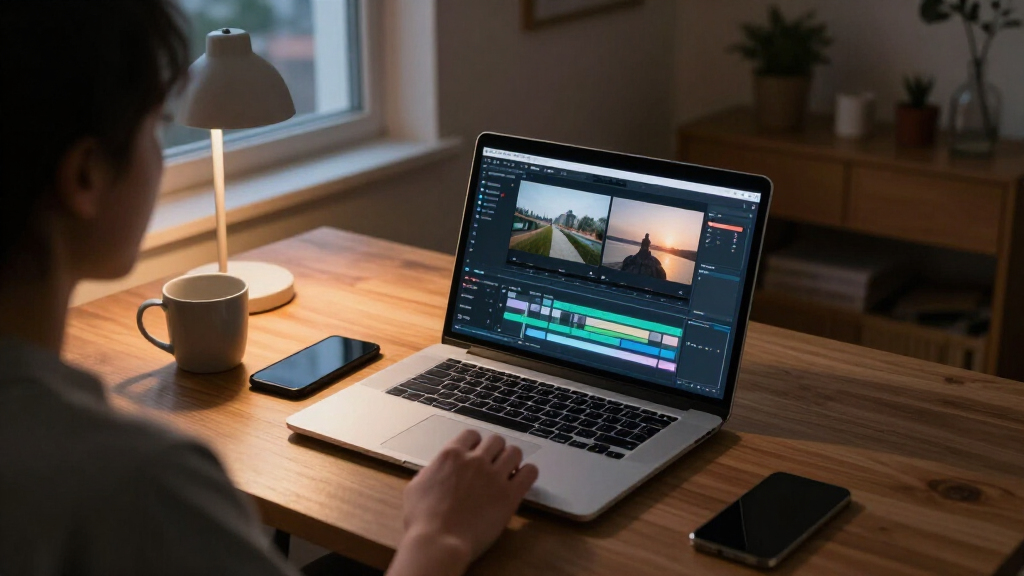

🔍 Read the full analysis: An Evening Of AI Building: From Rough Idea To First Video on ThorstenMeyerAI.com

Get smart everyday buys delivered free with Prime
- Fast, free delivery on millions of items
- Prime Video, Amazon Music and more included
- Member-only deals all year
TL;DR
Thorsten Meyer says he built a hand-drawn video engine in one evening, then revised it after the first full video proved slow and visually static. His account describes a workflow using a second AI code reviewer, human approval and measurable checks; the published video runs and metrics are reported by Meyer, not independently verified here.
Thorsten Meyer says he built a hand-drawn explainer-video engine in one evening, but the first full video it produced the next morning was slow and visually dull. In an account published on ThorstenMeyerAI.com and updated November 9, Meyer describes how he used a separate AI reviewer, human approval and measurable production checks to revise the system before publishing an improved video.
Meyer says the initial idea came from a video whose hand-drawn style he admired. To avoid copying it, he says he wrote down a limited set of general traits—such as a continuous illustrated world and hand-drawn strokes—and built a new engine without using the original video’s drawings, assets, layouts or drawing code. The design used his own color system and an openly licensed handwriting font, according to his account.
He says Anthropic’s Claude built the engine, while OpenAI’s Codex reviewed the code without contributing to its construction. Codex identified five issues in the first review round, Meyer says, and each was addressed with a test designed to fail against the earlier code. He also says he watched and approved a test video of about one minute before it was published that evening within an article about local votes against data centers.
The first complete video generated the next morning did not meet his expectations. Meyer says he recorded problems including excessive white space, icons that did not support the narration and illustrations that stopped moving after they were drawn. He kept that version online unchanged as an example of the initial result. After measuring the footage and revising the engine, he reports that across the first three scenes, frame coverage rose from 15% to 66%, still time fell from 29 seconds to zero, and camera moves increased from three to 27.
Infographic 01 · The new video look
One evening, one boring first video, one measured fix
Speed was not the point. The steps in between were: a second AI that reviews, a human who says yes, and numbers that became gates.
Share of the frame filled with content on the first three scenes after the fix. Before: 15%.
From an evening idea to a measured fix
Relative times, this week
- EveningA video I likedClean room: only a list of style traits, no drawings, assets or layouts
- Same eveningOwn engine, first reviewClaude builds; OpenAI’s Codex reviews; 5 findings fixed, each with a test that fails on the old code
- Same eveningA human says yesOne-minute test video approved and published
- Next morningFirst full video: slow and boringToo much white space, icons that did not fit, a picture that stood still
- Hours laterMeasured fix, then gatesThe first video in the improved look goes live
Source: my own build notes for the new video look, this week (engine history, review round, approval, critique, before/after measurement of the first three scenes).
Powered by Thorsten Meyer AI
From Visual Critique to Production Checks
The account’s central point is not simply that AI produced a video quickly. It is that a working demo and a publishable result are different milestones. Meyer describes a process in which subjective feedback about pacing and composition was converted into checks that can stop a build, rather than relying only on repeated manual adjustments.
That distinction matters for readers experimenting with AI production tools. A system can finish a task while still producing weak or misleading work. Meyer also stresses that a second model’s review does not replace human responsibility: he says a person with authority over the result watched the initial test and approved publication. His reported measurements are specific to this project and do not establish that the same workflow will produce comparable results elsewhere.
The article also presents software safeguards as useful only when they respond to real failures. Meyer says an earlier guard produced about 1,300 warnings in August, but nobody read the log and an alert email did not go out. The example underscores that checks need an effective route to a person, not merely a place to record problems.
Products Worth Considering

Canon IVY 2 Mini Photo Printer Bundle, Blush Pink

Dell 32 Plus 4K Monitor S3225QS, 31.5-Inch VA, 120Hz, FreeSync Premium

FLEXISPOT EN1 Electric Standing Desk, 48 x 24 in, Black
As an affiliate, we earn on qualifying purchases.
How the Video Engine Was Rebuilt
Meyer’s account describes a short sequence: a style idea led to a clean-room design brief; Claude built the engine; Codex reviewed the code; Meyer approved a short test; and the first full production exposed shortcomings that the initial demo had not. The improved version added rules about filling the frame, moving the camera with the narration and keeping drawn objects in motion. Meyer says the build now flags scenes that are too empty or include an object that does not illustrate what is being said.
The article places the video work alongside a separate experiment involving a local model and legal benchmark tasks. Meyer says a direct weight-editing experiment increased the model’s correct responses from four to all 10 published tasks, while its legal score remained zero. He uses that result to caution against treating task completion as proof of quality. In an update dated November 9, he says figures refer to those 10 published Lexassay tasks and that the runs are public on lexassay.com.
Both examples are presented as Meyer’s own build notes and experiments. They are not independent evaluations of the video engine or the legal model. The article’s practical focus is the use of separate measures for separate goals: visual motion and frame coverage for the video, and a legal score as well as task completion for the benchmark.
“A demo that runs is not a decision.”
— Thorsten Meyer
What the Published Metrics Establish
The figures in the account come from Meyer’s own experiments and build notes; the source does not provide an independent audit of the video measurements, the review findings or the legal benchmark result. The frame-coverage and movement figures apply to the first three scenes, not necessarily to every scene in the finished video.
The account also does not specify a full evaluation protocol for judging whether an illustration accurately supports narration, how consistently the new gates perform across different topics, or whether other reviewers would reach the same assessment. The legal-model result is limited to the 10 published tasks described in the update; a score of zero remained despite the higher completion count. Those results do not, on their own, show broader legal competence.
Further Runs and Human Review
Meyer says the revised video engine now applies frame and illustration checks during the build, before a video is rendered. The published account does not announce a release date for a separate product or a broader deployment. The immediate next step described is continued use of the workflow: check generated scenes, review failures and keep a human approval step before publication.
For the legal-model experiment, Meyer says the 10 Lexassay task runs are public at lexassay.com. Readers can inspect those runs, while further evidence would be needed to judge performance beyond that benchmark. Any additional video metrics, external review or changes to the production process have not been specified in the account.
Key Questions
What happened in the AI video project?
Thorsten Meyer says he built a hand-drawn explainer-video engine in one evening. After the first full video appeared slow and visually static, he measured the problems, revised the engine and added checks intended to catch similar issues before rendering.
How was the code reviewed?
Meyer says Claude built the engine and OpenAI’s Codex separately reviewed the code. He reports that Codex found five issues in the first review round and that each fix was paired with a test designed to fail on the earlier code.
Were the reported video improvements independently verified?
The source gives Meyer’s own measurements, not an independent evaluation. The reported changes—from 15% to 66% frame coverage, 29 seconds of still time to zero, and three camera moves to 27—apply to the first three scenes.
What does the legal-model experiment show?
Meyer says the model answered all 10 published legal tasks after a weight-edit experiment, up from four, while its legal score remained zero. He presents this as an example of why completing tasks should not be confused with achieving a strong result.
Source: ThorstenMeyerAI.com