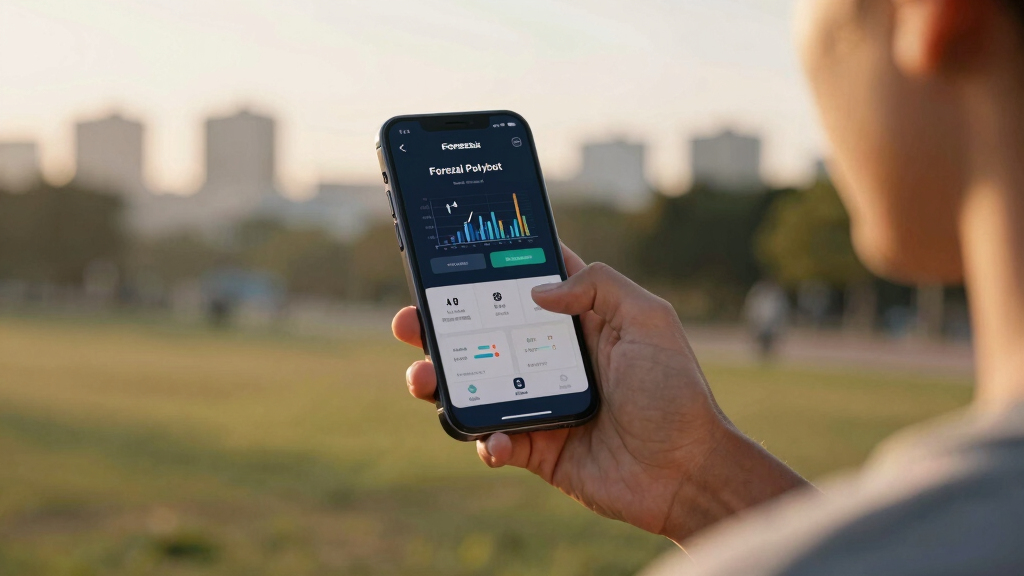

📊 Full opportunity report: Forezai · Polybot: When the AI Disagrees With the Odds on ThorstenMeyerAI.com — validation score, market gap, and execution plan.

Get smart everyday buys delivered free — and shop member deals
- Fast, free delivery on millions of items
- Access to Prime Big Deal Days deals on October 6–7
- Prime Video, Amazon Music and more included
TL;DR
Polybot, an AI trading bot for prediction markets, tests when an AI’s probability estimates differ from market prices. It emphasizes cautious trading and transparency, but remains experimental and risky.
Polybot, an AI trading tool for prediction markets, is testing whether an AI can reliably identify when its probability estimates diverge from market prices and decide when to act on those differences. This experiment highlights both the potential and the risks of using AI in high-stakes, real-time prediction markets, making it a notable development for researchers and traders alike.
Polybot is designed to research the conditions under which an AI’s independent probability estimate contradicts the market-implied odds, which are derived from crowd-sourced trading activity. The system compares its own analysis, based on public information, with the current market price, and only executes trades when the discrepancy exceeds a predefined threshold that accounts for fees, slippage, and model uncertainty. Importantly, each estimate and decision is recorded for transparency and post-trade analysis, emphasizing calibration and long-term reliability over short-term gains.
The project is strictly experimental, emphasizing that it is not a financial advice tool or a guaranteed money-maker. It operates under the understanding that prediction markets are highly efficient, and beating them consistently is extremely difficult. The core question is whether an AI can develop a meaningful edge by identifying genuine mispricings, rather than noise, and act responsibly in doing so. The system’s conservative approach—trading rarely and only on strong signals—reflects a risk-averse philosophy aimed at minimizing losses from overconfidence or model errors.
Developed by Forezai, Polybot is developed privately and is not publicly available, serving as both a research platform and a cautionary example of AI-driven trading in prediction markets. Its ongoing testing aims to shed light on the calibration of AI estimates, the practical limits of automated trading, and the importance of transparency and discipline in high-risk environments.
Polybot — when the AI disagrees with the odds
A prediction market puts a price on the future. Polybot asks: can an AI’s own estimate diverge from that price for real — and should it ever act on the gap?
Not financial, investment, legal or tax advice; not a recommendation or solicitation to trade, invest or use any software. Forezai · Polybot is experimental software, provided “as is” without warranty of accuracy or profitability. Trading and automated trading carry a substantial risk of loss including total loss of capital; past or backtested performance does not indicate future results. Prediction-market participation is restricted or prohibited in some jurisdictions (including for US persons) — you are solely responsible for compliance with applicable law. Consult a licensed professional before any financial decision. Produced with AI assistance under human editorial oversight; independent commentary, the author’s own views. Product and company names are trademarks of their respective owners; mention does not imply endorsement.
Why Polybot’s Approach Matters for AI and Markets
This experiment underscores the challenge of developing AI systems that can reliably identify mispricings in prediction markets, which are among the most information-dense and efficient trading environments. It highlights the importance of transparency, calibration, and risk discipline in automated trading. For researchers, it offers insights into the practical limits of AI in finance, especially regarding model confidence and market adaptation. For traders and investors, it serves as a reminder that even sophisticated AI tools must be used cautiously, as markets tend to eliminate arbitrage opportunities quickly and unpredictably.
prediction market trading software
As an affiliate, we earn on qualifying purchases.
As an affiliate, we earn on qualifying purchases.
Prediction Markets and AI: An Evolving Intersection
Prediction markets have long been valued for aggregating collective intelligence into a single probability, often outperforming individual forecasts. However, they are also very efficient, making consistent edges difficult to find. AI research in this space aims to leverage machine learning to identify subtle mispricings, but historical attempts often falter due to market complexities, costs, and adversarial behaviors. Polybot builds on this history, testing whether AI can meaningfully challenge market consensus without overtrading or falling prey to model errors.
Previous efforts in algorithmic trading and AI forecasting have shown mixed results, with many systems performing well in backtests but struggling in live environments. Polybot’s emphasis on transparency, calibration, and risk management reflects a cautious approach rooted in lessons learned from past failures. Its experimental nature invites community scrutiny and iterative improvement, marking a step forward in responsible AI experimentation in prediction markets.
“Polybot is an experimental tool designed to explore when and how an AI can reliably identify mispricings in prediction markets, with an emphasis on transparency and risk discipline.”
— Thorsten Meyer, Forezai
AI trading bot for prediction markets
As an affiliate, we earn on qualifying purchases.
As an affiliate, we earn on qualifying purchases.
Unanswered Questions About AI Effectiveness and Risks
It remains unclear whether Polybot can develop a consistent, calibrated edge in live prediction markets over the long term. The experiment’s results are still emerging, and market dynamics—such as liquidity, adversarial responses, and unforeseen costs—may limit its effectiveness. Additionally, the broader implications for AI-driven trading and market stability are not yet fully understood, and the project is ongoing.
automated trading tools for prediction markets
As an affiliate, we earn on qualifying purchases.
As an affiliate, we earn on qualifying purchases.
Next Steps for Polybot and Prediction Market AI Research
Forezai plans to continue testing Polybot across various market conditions, refining its thresholds and algorithms based on observed performance. The team aims to publish detailed calibration metrics and insights into the system’s decision-making process, contributing to the broader understanding of AI’s role in prediction markets. Further community engagement and peer review are expected to help evaluate the system’s reliability and potential for responsible deployment.
AI risk management trading software
As an affiliate, we earn on qualifying purchases.
As an affiliate, we earn on qualifying purchases.
Key Questions
Can Polybot reliably beat prediction markets?
Currently, Polybot is an experimental tool designed to explore the conditions under which AI might identify mispricings. It is not intended to reliably beat markets but to study the feasibility and risks involved.
Is using Polybot recommended for trading or investment?
No. Polybot is a research project and should not be used as a financial advice tool or for live trading without thorough testing and risk assessment.
What are the main risks of using AI in prediction markets?
Risks include model errors, market liquidity issues, costs from fees and slippage, and the potential for adversarial responses from other market participants. These factors can turn theoretical edges into losses.
How does Polybot ensure transparency?
Each probability estimate and trade decision is recorded with reasoning, allowing post-trade analysis and calibration checks, which promotes transparency and accountability.
Source: ThorstenMeyerAI.com
Halloween Picks
halloween
As an affiliate, we earn on qualifying purchases.