
TL;DR

Get smart everyday buys delivered free with Prime
- Fast, free delivery on millions of items
- Prime Video, Amazon Music and more included
- Member-only deals all year
Siemens is making a strategic push into industrial AI, focusing on physical factory data rather than chat-based AI. The company announced a partnership with NVIDIA to develop an ‘Industrial AI Operating System’ aimed at transforming manufacturing. The initiative underscores Siemens’ belief that AI’s most valuable application is on the factory floor.
Siemens has unveiled a comprehensive strategy to embed artificial intelligence into manufacturing operations, partnering with NVIDIA to develop what they call an ‘Industrial AI Operating System.’ The initiative aims to leverage proprietary industrial data to transform factory automation, design, and supply chains, marking a significant shift from traditional AI applications focused on language and chatbots.
During CES 2026, Siemens CEO Roland Busch emphasized that ‘Industrial AI is no longer a feature; it’s a force that will reshape the next century.’ The company’s core effort is the development of the Industrial Foundation Model (IFM), designed to process and contextualize 3D models, engineering drawings, and sensor data to optimize manufacturing and engineering workflows. The partnership with NVIDIA centers on creating an ‘Industrial AI Operating System,’ a platform intended to embed AI across the entire industrial lifecycle, from design to supply chain management.
Specific initiatives include GPU-accelerated simulation tools, the deployment of NVIDIA’s physics-based AI models like PhysicsNeMo for real-time system optimization, and the launch of a fully AI-driven, adaptive manufacturing site in Erlangen, Germany, set for 2026. Siemens also plans to introduce Digital Twin Composer and collaborate with clients such as PepsiCo to simulate facility upgrades, with nine industrial copilots in development.
Implications of Siemens’ Industrial AI Investment
This development signals a major shift in industrial AI, emphasizing the importance of physical data and domain expertise over general-purpose language models. Siemens’ approach could redefine factory automation, making AI a core component of manufacturing competitiveness and efficiency. The partnership with NVIDIA highlights reliance on advanced hardware and simulation libraries, raising questions about hardware dependency and sovereignty, especially for European clients. The initiative could accelerate the adoption of AI in manufacturing but faces challenges related to long sales cycles and the need for validated performance results.
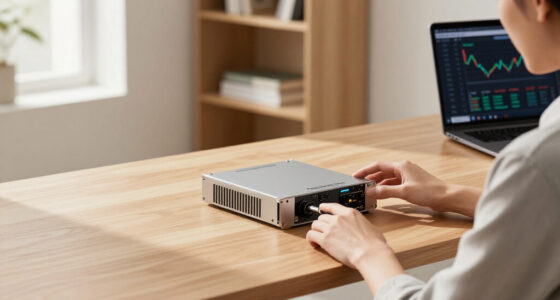
industrial AI software for manufacturing
As an affiliate, we earn on qualifying purchases.
As an affiliate, we earn on qualifying purchases.
Background on Siemens’ Industrial AI Strategy
Siemens has long been a leader in automation and industrial software, with over 175 years of experience in engineering and manufacturing. Its previous announcements, including the launch of the Industrial Foundation Model at Hannover Messe 2025, laid the groundwork for integrating AI into physical systems. The partnership with NVIDIA, announced at CES 2026, builds on Siemens’ goal to embed AI across the entire industrial ecosystem, moving beyond traditional automation to more intelligent, adaptive manufacturing processes.
While many tech firms focus on chatbots and language AI, Siemens’ emphasis on physical AI—processing sensor telemetry, CAD models, and physics-based data—represents a distinct strategic focus. The company’s existing customer relationships with firms like PepsiCo and Audi position it well for deploying these advanced AI tools at scale.
“‘Industrial AI is no longer a feature; it’s a force that will reshape the next century.’”
— Roland Busch, Siemens CEO
As an affiliate, we earn on qualifying purchases.
Unconfirmed Performance and Deployment Timelines
While Siemens announced ambitious plans and partnerships, specific hardware configurations, deployment timelines, and validated performance metrics remain undisclosed. The Erlangen lighthouse factory is scheduled for 2026, but details on actual AI performance and integration are still emerging. The reliance on NVIDIA’s infrastructure raises questions about hardware dependence and European market sovereignty, which remain unaddressed.
GPU-accelerated factory simulation
As an affiliate, we earn on qualifying purchases.
As an affiliate, we earn on qualifying purchases.
Next Steps in Siemens’ Industrial AI Roadmap
Siemens will likely focus on deploying the Erlangen factory as a proof of concept, with subsequent scaling to other sites globally. The company plans to introduce Digital Twin Composer and expand its portfolio of industrial copilots by mid-2026. Monitoring the performance, validation, and customer feedback will be key to assessing the platform’s impact. Additionally, Siemens may face competitive pressure from other firms developing industrial AI solutions, including emerging startups and established tech giants.
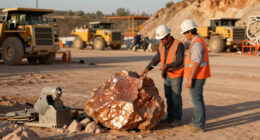
sensor data analysis industrial equipment
As an affiliate, we earn on qualifying purchases.
As an affiliate, we earn on qualifying purchases.
Key Questions
What is Siemens’ Industrial Foundation Model?
The Industrial Foundation Model (IFM) is Siemens’ AI system designed to process and contextualize 3D models, engineering drawings, and sensor data to optimize manufacturing and engineering workflows.
How does Siemens’ partnership with NVIDIA enhance its industrial AI efforts?
The partnership provides GPU-accelerated simulation, physics-based AI models like PhysicsNeMo, and the development of an integrated ‘Industrial AI Operating System’ to embed AI across the manufacturing lifecycle.
When will Siemens’ fully AI-driven factory open?
The first factory is scheduled to launch in Erlangen, Germany, in 2026, serving as a blueprint for global deployment.
What are the main challenges Siemens faces with this approach?
The main challenges include long sales and deployment cycles, reliance on NVIDIA’s hardware infrastructure, and the need for validated performance results across diverse industrial environments.
Why is Siemens focusing on physical AI rather than chatbots?
Siemens believes that the most valuable AI applications are in physical systems—factories, machinery, and infrastructure—where domain expertise and proprietary data create a durable competitive advantage.
Source: ThorstenMeyerAI.com
Fall Picks
fall essentials
As an affiliate, we earn on qualifying purchases.