
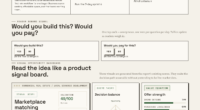
🔍 Read the full analysis: Why Mistral Large 4 Didn’t Make My October 2026 AI Stack on ThorstenMeyerAI.com

Get smart everyday buys delivered free with Prime
- Fast, free delivery on millions of items
- Prime Video, Amazon Music and more included
- Member-only deals all year
TL;DR
An October analysis from ThorstenMeyerAI.com says Mistral Large 4 did not meet the author’s quality-and-cost threshold for inclusion in a personal AI stack. In the Artificial Analysis Intelligence Index comparison cited, seven configurations scored higher while costing less per task; the author also reports unusually high output volume and describes hallucinations observed in personal testing.
Mistral Large 4 will not join the author’s October AI stack, according to an analysis published by ThorstenMeyerAI.com, because the model scored lower and cost more per task than seven configurations in the comparison. The assessment uses results from Artificial Analysis Intelligence Index v4.3.x and argues that Mistral’s relatively low token prices do not translate into a lower overall task cost.
The comparison gives Mistral Large 4 an index score of 38 and a cost of $1.13 per task. Seven alternatives in the analysis score higher at lower estimated task cost: three GPT-6.1 Sol settings, GLM-5.3-Flash, DeepSeek V4.1 Flash, Claude Opus 5.5 at low effort, and Claude Sonnet 5.5 at medium effort. The reported alternatives cost between $0.21 and $0.59 per task, with index scores from 39 to 51.
The author says Mistral’s two-week launch discount reduced its estimated task cost to $0.57. At that price, six of the seven alternatives still remained cheaper and higher-scoring in the comparison; Sonnet 5.5 at medium effort was the exception. The source cautions that the index measures general capability rather than performance on every individual workload and recommends shadow-testing before changing a system.
The proposed October stack remains centered on Claude Opus 5.5 for building and GPT-6.1 Sol for detailed work and review, with Jev handling high-volume yes-or-no decisions and routing. The author says a separate model may be used for second opinions when the main systems disagree. Gemini 4 Argon is described as a possible candidate, but its access is reported as restricted.
Opus builds, Sol digs, Jev decides — and Mistral Large 4 doesn’t make the cut
Two models landed on the price curve in eight days. My stack doesn’t change. The test is the same as in September: does it clear my bar at a lower cost per task than what I already run? For Mistral Large 4, no — seven configurations beat it on score and cost at once.
Cheaper per token ($4.18 vs Sol’s $10 output) — but ~8× the output of Sol for a lower score. Budget cost per task, not per token.
Speed: 116 tok/s, 1.46 s to first token — far faster than Sol at high/xhigh (57–69 s).
Cyber: AA Cyber Index 50, CyberGym-E2E 82%.
Jurisdiction: French parent, weights at the end of October.
For legally bound buyers, the best European option by a wide margin. For my stack, none of it clears the bar.
Being behind the frontier is normal for a challenger. Being beaten on both axes by models you can already buy is a pricing problem, not a capability one. Argon is the more interesting arrival — level with Astra and Fable at a third of Fable’s cost — but access is still restricted, and a model I can’t put into production isn’t part of my stack. Run the dominance test on every new model before you read its benchmark table. Most new models don’t change anything — the ruler tells you which ones do.
Why Per-Task Cost Changes the Choice
The comparison highlights why price per token is not the same as cost per completed task. The source lists Mistral Large 4 at $1.36 per million input tokens and $4.18 per million output tokens, while GPT-6.1 Sol is listed at $10 per million output tokens. But the analysis says Mistral generated 200 million output tokens to complete the benchmark, compared with a median of 81 million for comparable models and 25 million for Sol at high effort.
Those figures make output volume part of the model-selection decision. A lower token rate can be outweighed by generating substantially more tokens to finish the same evaluation. For developers and teams budgeting AI services, the article’s central point is to compare cost per task alongside quality, rather than infer value from token pricing alone.
The author also warns that benchmark differences may matter more in long-running agent tasks, where a model makes multiple decisions and produces output at each step. That is the author’s interpretation of the results, not a universal finding about every use case. The index is described as heavily weighted toward agentic evaluations, but readers would still need workload-specific tests to know how these models compare for their own applications.
As an affiliate, we earn on qualifying purchases.
The October Model Comparison
The author frames the comparison as an update to a view published eight days earlier: that competition among advanced AI models was increasingly about a price curve rather than a leaderboard alone. The new comparison adds Gemini 4 Argon, which the source dates to September 30, and Mistral Large 4, described as having arrived the day before the article.
The table also includes two Chinese open-weight models, GLM-5.3-Flash and DeepSeek V4.1 Flash, as reference points for the competitive field. In the source’s figures, GLM scores 42 at $0.25 per task, while DeepSeek scores 39 at $0.27. Mistral’s score of 38 is lower than both, while its listed task cost is several times higher. These are figures reported by the analysis, not independently verified here.
The source gives Mistral Large 4 credit for other characteristics. It reports a score of 50 on the AA Cyber Index, 82% on CyberGym-E2E, throughput of 116 tokens per second and a 1.46-second time to first token. The author also says Mistral’s weights are due at the end of October under EU jurisdiction, describing the model as a possible option for users with a legal requirement to use a European model.
“The answer is no.”
— ThorstenMeyerAI.com author
As an affiliate, we earn on qualifying purchases.
Limits of the Benchmark Evidence
The comparison is an analysis of published benchmark figures, not a controlled evaluation of every reader’s workload. The source itself says the Artificial Analysis Intelligence Index is a map of general capability, not a verdict on a specific application, and advises shadow-testing before switching models. The methods behind the article’s per-task cost estimates and the degree to which they generalize to other prompts are not fully described in the supplied material.
The author reports seeing confident hallucinations in personal testing of Mistral Large 4, while distinguishing that observation from Artificial Analysis data. The source does not provide examples, test conditions or a measured hallucination rate for Mistral. Its comparison cites a 15% AA-Omniscience hallucination rate for Gemini 4 Argon, but does not give an equivalent figure for Mistral.
Availability and future pricing also remain open questions. Mistral is described as a preview with a two-week discount, and the source says its weights are due later in October. Gemini Argon’s access is described as restricted, with general availability pending. The supplied material does not establish whether those conditions have since changed.
As an affiliate, we earn on qualifying purchases.
Public Access and Workload Testing
The next developments to watch are whether Gemini 4 Argon becomes generally available and whether Mistral publishes its weights on the timeline stated in the analysis. Wider access would let the author test Argon in the proposed second-opinion role; the source says the model is not part of the production stack while access remains limited.
For Mistral Large 4, the author’s stated bar is practical performance at a competitive cost, not benchmark position alone. The article recommends testing models against real tasks before switching. Any reassessment would depend on those results, the model’s availability and pricing after the launch discount, and whether its output volume or reliability changes under the user’s own workloads.
As an affiliate, we earn on qualifying purchases.
Key Questions
Why did Mistral Large 4 miss the October AI stack?
The author says it scored 38 on the cited index and cost $1.13 per task, while seven tested configurations had both higher scores and lower estimated task costs.
Did the launch discount change the comparison?
The source says a two-week discount brought Mistral’s estimated cost to $0.57 per task. Six of the seven alternatives still beat it on both score and cost; Sonnet 5.5 at medium effort did not.
Why can a model with cheaper token prices cost more overall?
Total task cost depends on both token rates and how many tokens a model uses. The analysis reports 200 million output tokens for Mistral’s index evaluation, compared with a median of 81 million for comparable models.
Does the comparison prove Mistral is unsuitable for every task?
No. The source says the index measures general capability, not performance on a particular workload. Its conclusion concerns the author’s selection criteria; readers would need workload-specific testing to judge their own use cases.
The author says broader access could make Gemini 4 Argon a candidate and recommends testing models on actual tasks. Mistral’s later availability, pricing and observed performance could also affect a future assessment.
Source: ThorstenMeyerAI.com
Fall Picks
fall essentials
As an affiliate, we earn on qualifying purchases.