

The best personal finance book for beginners is The Total Money Makeover, because it turns vague money anxiety into a concrete, step-by-step debt-elimination plan that a complete novice can follow. If you want broad fundamentals instead of a debt-focused program, Personal Finance QuickStart Guide covers budgeting, saving, credit, and investing in one accessible volume, while The Psychology of Money is the strongest pick for understanding why you make bad financial decisions in the first place. The main tradeoff in this category is between actionable systems (workbook-style plans with specific steps) and conceptual grounding (timeless principles that adapt to any situation), plus format choices like infographic guides versus dense reference books. Age matters too: several titles are written specifically for teens and young adults, while others assume you already have paychecks, loans, and tax obligations to manage. Keep reading for the full breakdown of all 14 books and which one matches your situation.

Get smart everyday buys delivered free with Prime
- Fast, free delivery on millions of items
- Prime Video, Amazon Music and more included
- Member-only deals all year
Key Takeaways
- Books with a single dominant framework (The Total Money Makeover’s baby steps, The Simple Path to Wealth’s index-fund philosophy) ranked higher than survey-style books because beginners finish them and actually act.
- The ‘For Dummies’ titles split their audience: Financial Literacy Essentials For Dummies works as a true starter, while Personal Finance For Dummies is better kept as a long-term reference you’ll return to for taxes and loans.
- Books aimed at teens and young adults overlapped heavily in content — the differentiator was tone and habit-building, where Money Skills for Young Adults outperformed the more schoolroom-style Personal Finance for Teens and Young Adults.
- The Psychology of Money and Finance for Beginners: 101 Concepts sit at opposite ends of the abstraction spectrum — one teaches mindset with almost no math, the other teaches vocabulary and mechanics — and most beginners need one of each rather than either alone.
- Visual formats earned their spot: The Infographic Guide to Personal Finance sacrifices depth but dramatically lowers the barrier for readers who abandon traditional finance books within chapters.
| Personal Finance QuickStart Guide |  | Best Overall | Format: Paperback / eBook | Audience: Beginners | Core topics: Budgeting, saving, investing, financial freedom | VIEW LATEST PRICE | See Our Full Breakdown |
| Personal Finance for Teens and Young Adults |  | Best for Teens | Format: Paperback / eBook | Audience: Teens and young adults | Core topics: Budgeting, saving, investing | VIEW LATEST PRICE | See Our Full Breakdown |
| Personal Finance for Beginners – A Simple Guide to Take Control of Your Financial Situation |  | Best Value | Format: Paperback / eBook | Audience: Beginners | Core topics: Money management, investing basics | VIEW LATEST PRICE | See Our Full Breakdown |
| Personal Finance For Dummies |  | Best Reference | Format: Paperback | Audience: Beginners | Core topics: Budgeting, saving, investing, credit, taxes | VIEW LATEST PRICE | See Our Full Breakdown |
| Finance for Beginners: 101 Concepts |  | Best Glossary-Style Primer | Format: Paperback / eBook | Audience: Beginners | Core topics: Personal finance, investing, money management | VIEW LATEST PRICE | See Our Full Breakdown |
| Money Skills for Young Adults: A Beginner’s Guide to Financial Habits |  | Best for First-Jobbers | Primary Audience: Young adults | Core Topics: Budgeting, saving, investing basics, financial independence | Format: Paperback / ebook | VIEW LATEST PRICE | See Our Full Breakdown |
| The Total Money Makeover: A Proven Plan for Financial Peace |  | Best for Debt Elimination | Primary Focus: Debt elimination and financial stability | Core Method: Debt snowball, step-by-step baby steps | Edition: Updated and expanded | VIEW LATEST PRICE | See Our Full Breakdown |
| How to Adult: Personal Finance for the Real World |  | Best for Real-World Basics | Primary Audience: Adults new to independent money management | Core Topics: Budgeting, everyday financial planning, money management | Tone: Conversational and practical | VIEW LATEST PRICE | See Our Full Breakdown |
| Financial Literacy Essentials For Dummies |  | Best Reference Primer | Series: For Dummies | Primary Audience: Beginners | Core Topics: Financial literacy fundamentals and decision-making | VIEW LATEST PRICE | See Our Full Breakdown |
| The Infographic Guide to Personal Finance: A Visual Reference for Everything You Need to Know | 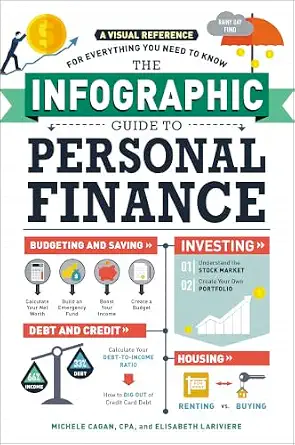 | Best Visual Learners Pick | Format: Illustrated infographic guide | Primary Audience: Visual learners and beginners | Core Topics: Budgeting, saving, investing, financial planning | VIEW LATEST PRICE | See Our Full Breakdown |
| Financial Literacy for Young Adults: How to Manage, Save, and Invest Money |  | Best for Building Financial Independence Early | Format: Paperback / Kindle | Target Audience: Young adults | Core Topics: Money management, saving, investing | VIEW LATEST PRICE | See Our Full Breakdown |
| The Simple Path to Wealth: Your Road Map to Financial Independence and a Rich, Free Life |  | Best Long-Term Wealth Roadmap | Format: Paperback / Kindle / Audiobook | Target Audience: Beginner to intermediate investors | Core Topics: Financial independence, investing, wealth building | VIEW LATEST PRICE | See Our Full Breakdown |
| The Psychology of Money: Timeless Lessons on Wealth, Greed, and Happiness |  | Best for Money Mindset | Format: Hardcover / Paperback / Kindle / Audiobook | Target Audience: General readers, all experience levels | Core Topics: Behavioral finance, wealth psychology, happiness | VIEW LATEST PRICE | See Our Full Breakdown |
| Personal Finance 101: From Saving and Investing to Taxes and Loans, an Essential Primer on Personal Finance |  | Best All-in-One Beginner Reference | Format: Paperback / Kindle | Target Audience: Beginners | Core Topics: Saving, investing, taxes, loans | VIEW LATEST PRICE | See Our Full Breakdown |
| personal finance books for beginner | Core topics | Format | Approach | Depth level |
|---|---|---|---|---|
| Personal Finance QuickStart Gu | Budgeting, saving, investing, financial freedom | Paperback / eBook | Practical strategies and tips | Beginner to early intermediate |
| Personal Finance for Teens and | Budgeting, saving, investing | Paperback / eBook | Instructional, school-gap focused | Absolute beginner |
| Personal Finance for Beginners | Money management, investing basics | Paperback / eBook | Simple, control-focused guide | Beginner |
| Personal Finance For Dummies | Budgeting, saving, investing, credit, taxes | Paperback | Reference-style comprehensive overview | Beginner to intermediate |
| Finance for Beginners: 101 Con | Personal finance, investing, money management | Paperback / eBook | 101 standalone concepts | Beginner |
| Money Skills for Young Adults: | Budgeting, saving, investing basics, financial independence | Paperback / ebook | Habit-building with simple tools | Beginner |
| The Total Money Makeover: A Pr | — | — | Prescriptive plan with milestones | Beginner to intermediate |
| How to Adult: Personal Finance | Budgeting, everyday financial planning, money management | — | Everyday advice, topic-by-topic | Beginner |
| Financial Literacy Essentials | Financial literacy fundamentals and decision-making | Paperback reference guide | — | Beginner overview |
| The Infographic Guide to Perso | Budgeting, saving, investing, financial planning | Illustrated infographic guide | Visual reference, topic-by-topic | Beginner overview |
| Financial Literacy for Young A | Money management, saving, investing | Paperback / Kindle | Practical, decision-oriented guidance | — |
| The Simple Path to Wealth: You | Financial independence, investing, wealth building | Paperback / Kindle / Audiobook | Simple, philosophy-driven strategy | — |
| The Psychology of Money: Timel | Behavioral finance, wealth psychology, happiness | Hardcover / Paperback / Kindle / Audiobook | — | — |
| Personal Finance 101: From Sav | Saving, investing, taxes, loans | Paperback / Kindle | — | — |
More Details on Our Top Picks
Personal Finance QuickStart Guide
This pick earns the top spot because it balances breadth with an action-oriented tone better than anything else in this batch. Where Personal Finance for Beginners stays descriptive, this guide pushes readers toward eliminating financial stress as a concrete goal, which matters for beginners who feel overwhelmed rather than under-informed. Compared with Personal Finance For Dummies, it trades some encyclopedic depth for momentum — a fair exchange when the reader’s problem is getting started, not mastering tax brackets. The tradeoff: once the basics click, the ceiling is low. There are no worksheets or tools to work through, so readers who learn by doing will need a companion like The Infographic Guide to Personal Finance nearby.
Pros:- Highly accessible language for complete beginners
- Action-oriented framing that reduces financial anxiety
- Covers budgeting, saving, and investing in one pass
- Faster read than heavyweight references like Personal Finance For Dummies
Cons:- No worksheets or interactive tools
- Thin on advanced financial concepts
- Less useful as a long-term reference once basics are mastered
Best for: Stressed-out first-timers who want a clear starting point and a confidence boost before tackling deeper material
Not ideal for: Readers who want workbooks, exercises, or advanced investing strategy — this stays firmly in beginner territory
- Format:Paperback / eBook
- Audience:Beginners
- Core topics:Budgeting, saving, investing, financial freedom
- Approach:Practical strategies and tips
- Interactive elements:None
- Depth level:Beginner to early intermediate
Our verdict“The strongest all-around first book for someone who wants one readable guide instead of a shelf of them.”
Personal Finance for Teens and Young Adults
Most books in this roundup assume the reader already has paychecks and bills; this one fills the gap before that stage, teaching money skills not covered in school. Compared with Money Skills for Young Adults, which focuses on habit-building after independence, this title leans more instructional — budgeting, saving, and investing explained from zero. That makes it the right first finance book for a teenager, possibly ahead of How to Adult, which presumes more real-world context. The honest tradeoff: it’s a newer title with limited reviews and track record, so parents buying it sight-unseen are taking a chance. And like many books aimed at young readers, it’s a launchpad rather than a reference — most teens will outgrow it within a couple of years.
Pros:- Written for readers with zero financial background
- Covers budgeting, saving, and investing fundamentals
- Addresses the school-curriculum gap directly
- Aimed at building early financial independence
Cons:- Very limited reviews and availability data
- Content will be outgrown quickly by motivated readers
- Less depth than general beginner guides
Best for: Parents buying a first money book for a teen, or students who want a head start before their first paycheck
Not ideal for: Adults mid-career — the school-skipping framing and examples won’t match their situation
- Format:Paperback / eBook
- Audience:Teens and young adults
- Core topics:Budgeting, saving, investing
- Approach:Instructional, school-gap focused
- Interactive elements:None specified
- Depth level:Absolute beginner
Our verdict“A sensible gift for a teenager who’s never had a money conversation, though adults should pick something from the main lineup instead.”
Personal Finance for Beginners – A Simple Guide to Take Control of Your Financial Situation
Short, cheap, and direct — this is the budget-friendly entry point for readers who don’t want to commit 300 pages to a topic they’re not sure they’ll enjoy. The pitch is control: taking charge of your situation rather than absorbing theory, which separates it from Finance for Beginners: 101 Concepts, a glossary-style survey. Compared with the QuickStart Guide, it covers similar ground with less polish and fewer pages, making it better as a weekend read than a course of study. That brevity is also the catch — anyone past the absolute basics, or hoping for real investing strategy, will finish hungry. Pair it with The Simple Path to Wealth if investing turns out to be the interesting part.
Pros:- Very accessible for absolute beginners
- Covers both money management and investing basics
- Practical, control-oriented framing
- Lower time commitment than full-length guides
Cons:- Lacks advanced investment strategies
- Too basic for anyone with existing financial knowledge
- Less comprehensive than Personal Finance For Dummies
Best for: Budget-conscious readers who want a fast, low-commitment overview before investing in a bigger guide
Not ideal for: Experienced investors or readers wanting depth — the investing section is a doorway, not a room
- Format:Paperback / eBook
- Audience:Beginners
- Core topics:Money management, investing basics
- Approach:Simple, control-focused guide
- Interactive elements:None
- Depth level:Beginner
Our verdict“A low-risk starter read for the curious or the budget-conscious, best treated as a stepping stone rather than a finish line.”
Personal Finance For Dummies
Where the other picks here are reads, this one is a keep-on-the-shelf reference — the familiar Dummies format means broad coverage of budgeting, saving, investing, credit, and taxes in a single volume. It’s the closest thing in this batch to Financial Literacy Essentials For Dummies, but fuller, which is why it earns the reference slot while its slimmer sibling suits quick primers. The tradeoff against something like the QuickStart Guide is tone and pace: it’s longer, drier in stretches, and less motivational, so beginners who need momentum may stall halfway. There’s also no digital companion content, unusual for a modern finance title. Still, if the goal is one book that answers questions for years, this is the sturdier purchase.
Pros:- Wide topic coverage in one volume
- Trusted, long-established series format
- Plain-English explanations throughout
- Works as a lookup reference, not just a linear read
Cons:- Longer and less motivational than shorter beginner guides
- No digital or online resources included
- Skims past advanced strategies
Best for: Readers who want one durable reference book they’ll return to for years, not a one-time motivational read
Not ideal for: Motivation-seekers and busy readers — the length and reference style make it easy to abandon unfinished
- Format:Paperback
- Audience:Beginners
- Core topics:Budgeting, saving, investing, credit, taxes
- Approach:Reference-style comprehensive overview
- Series:For Dummies
- Interactive elements:None
- Depth level:Beginner to intermediate
Our verdict“The pick for buyers who value completeness and longevity over speed and inspiration.”
Finance for Beginners: 101 Concepts
This one plays a different role: it’s organized as 101 discrete concepts, making it the easiest book in the batch to read in random order or five-minute chunks. Where Personal Finance for Beginners builds an argument, this is closer to a visual-free reference deck in prose — good for filling vocabulary gaps so terms like index funds or compound interest stop feeling foreign. Compared with Personal Finance 101, which takes a similar primer position but with a more structured flow, this suits scattered readers and commuters. The cost of that structure is narrative: there’s no overarching plan to follow, no exercises, and no roadmap from page one to financial independence. Readers wanting a system should head to The Total Money Makeover instead.
Pros:- Bite-size concept-by-concept structure
- Covers investing, saving, and money management fundamentals
- Easy to dip in and out of casually
- Beginner-friendly explanations without jargon
Cons:- No overarching action plan or roadmap
- No interactive content or exercises
- Can feel fragmented compared with narrative guides
Best for: Readers who learn in short sessions and want financial vocabulary and concepts explained piecemeal
Not ideal for: Anyone seeking a step-by-step financial plan — concepts without a system won’t change behavior on their own
- Format:Paperback / eBook
- Audience:Beginners
- Core topics:Personal finance, investing, money management
- Approach:101 standalone concepts
- Structure:Non-linear, dip-in/dip-out
- Interactive elements:None
- Depth level:Beginner
Our verdict“A convenient primer for filling knowledge gaps in spare moments, not a substitute for a book with an actual plan.”
Money Skills for Young Adults: A Beginner’s Guide to Financial Habits
This pick makes the most sense for readers cashing their first real paycheck and wondering what to do with it. Where Personal Finance for Teens and Young Adults leans toward students still in school, this one assumes you have income and need habits, not theory. The simple budgeting and saving tools are its strongest asset — you can act on them the same day you read them. Compared with Financial Literacy Essentials For Dummies, it trades breadth for a tighter focus on financial independence, which pays off for readers who want a straight path rather than a survey. The tradeoff is real, though: investing gets only surface-level treatment, so anyone ready to open a brokerage account will outgrow it quickly.
Pros:- Practical, immediately actionable budgeting and saving tools
- Tightly focused on building financial independence for young adults
- Habit-based approach that prevents common first-paycheck mistakes
- Simple enough to finish in a weekend
Cons:- Investing guidance is surface-level at best
- Thin on advanced topics readers will need within a year or two
Best for: Recent graduates and young adults starting their first job who need to build money habits from zero
Not ideal for: Readers looking for actual investment strategy — the investing chapter is thin and stays at the beginner level
- Primary Audience:Young adults
- Core Topics:Budgeting, saving, investing basics, financial independence
- Format:Paperback / ebook
- Approach:Habit-building with simple tools
- Depth Level:Beginner
- Best Use:First income, building habits from scratch
Our verdict“A confidence-builder for young adults with fresh income who need habits first and depth later.”
The Total Money Makeover: A Proven Plan for Financial Peace
For readers whose finances are dominated by credit card balances or student loans, this is the most direct action plan in the lineup. Unlike How to Adult, which surveys many topics lightly, this book commits to one mission: the debt snowball method, laid out step by step with milestones you can measure. The updated and expanded edition refreshes examples for current economic conditions, which matters when older editions feel dated. Its strength is momentum — the plan is genuinely proven and psychologically smart for people who need wins early. The tradeoff is rigidity: the anti-credit-card and conservative investing stance frustrates readers who want nuance, and if debt isn’t your problem, most of the book won’t apply to you.
Pros:- Step-by-step debt snowball plan that’s easy to follow and measure
- Strong motivational framing that keeps readers on track
- Updated edition with current examples
- Proven track record across millions of readers
Cons:- Investing guidance is conservative and light on strategy
- Ideologically rigid — dismisses tools like credit cards entirely
Best for: Readers carrying significant consumer debt who need a structured, motivating payoff plan
Not ideal for: Debt-free readers focused on investing — the plan spends most of its pages on debt elimination
- Primary Focus:Debt elimination and financial stability
- Core Method:Debt snowball, step-by-step baby steps
- Edition:Updated and expanded
- Approach:Prescriptive plan with milestones
- Depth Level:Beginner to intermediate
- Best Use:Getting out of debt systematically
Our verdict“The clear choice if debt is your central problem; skip it if you’re already past that stage.”
How to Adult: Personal Finance for the Real World
Positioned between the youth-focused Money Skills for Young Adults and the debt-obsessed Total Money Makeover, this book fills a specific gap: everyday money decisions that no one teaches you — rent, bills, insurance-adjacent choices, and month-to-month budgeting. Its tone is conversational, which makes it the least intimidating entry point in this batch for readers genuinely anxious about money. Compared with Financial Literacy Essentials For Dummies, it reads more like advice from a friend and less like a textbook. That approachability is also its ceiling: the strategies stay general, and readers who want concrete numbers, worksheets, or a specific plan will find it too soft on execution. It’s an orientation, not a roadmap.
Pros:- Covers practical real-world topics like rent and bills that other books skip
- Conversational, non-judgmental tone for anxious beginners
- Easy-to-understand budgeting guidance
- Quick read that builds baseline confidence
Cons:- Lacks detailed strategies and concrete frameworks
- Content depth is limited — more orientation than action plan
Best for: Adults new to managing their own money who want approachable guidance on everyday financial decisions
Not ideal for: Readers who want specific strategies, numbers, and worksheets — the guidance stays general
- Primary Audience:Adults new to independent money management
- Core Topics:Budgeting, everyday financial planning, money management
- Tone:Conversational and practical
- Depth Level:Beginner
- Approach:Everyday advice, topic-by-topic
- Best Use:Building a baseline understanding of adult finances
Our verdict“A low-pressure starting point for adults learning to manage money solo, before they’re ready for a structured plan.”
Financial Literacy Essentials For Dummies
Compared with the narrative-driven How to Adult, this entry earns its place as the reference-style primer — organized, scannable, and dependable when you need a definition or a refresher on a specific concept. The For Dummies format does real work here: clear explanations, logical chapter structure, and content you can dip into without reading cover to cover. It covers more ground than Money Skills for Young Adults, making it the better shelf companion for readers who want one book that answers many questions. The tradeoff is depth: complex topics get compressed to essentials, and unlike competing guides, there are no worksheets or digital resources to turn reading into doing. Pair it with a more action-oriented pick if you want both knowledge and a plan.
Pros:- Clear, accessible explanations of core financial concepts
- Well-organized structure ideal for looking things up later
- Broad coverage of fundamentals in one compact volume
- Trusted, familiar beginner-friendly format
Cons:- Complex topics are compressed to the essentials only
- No worksheets or accompanying digital resources
Best for: Beginners who want a clear, scannable reference to keep on the shelf and consult as questions arise
Not ideal for: Hands-on learners who need exercises and digital tools — this is reading, not doing
- Series:For Dummies
- Primary Audience:Beginners
- Core Topics:Financial literacy fundamentals and decision-making
- Format:Paperback reference guide
- Depth Level:Beginner overview
- Extras:None — no digital resources included
- Best Use:Quick reference and concept refreshers
Our verdict“The best keep-on-the-shelf primer for beginners who value clarity and breadth over depth.”
The Infographic Guide to Personal Finance: A Visual Reference for Everything You Need to Know
This is the book for readers whose eyes glaze over at dense paragraphs — the infographic format turns budgeting, credit, and investing basics into visual pages you can absorb in minutes. Where Financial Literacy Essentials For Dummies explains concepts in prose, this one shows them, which makes it the fastest entry point in the roundup for building a mental map of personal finance. It works beautifully as a quick-reference desk companion or a gift for a reluctant reader. The tradeoff mirrors its strength: visuals compress information, so explanations stay shallow, and anyone past the basics — or comparing it to a full guide like the Personal Finance QuickStart Guide — will find it runs out of runway on anything advanced.
Pros:- Infographic format makes complex topics instantly graspable
- Broad visual overview of budgeting, investing, and planning
- Excellent quick-reference companion
- Very fast to get through — ideal for low-motivation readers
Cons:- Explanations are shallow by design
- Advanced financial strategies are largely absent
Best for: Visual learners and reluctant readers who want to grasp personal finance basics fast
Not ideal for: Readers who want detailed explanations or advanced strategies — the visual format caps the depth
- Format:Illustrated infographic guide
- Primary Audience:Visual learners and beginners
- Core Topics:Budgeting, saving, investing, financial planning
- Depth Level:Beginner overview
- Approach:Visual reference, topic-by-topic
- Best Use:Quick reference and fast onboarding
Our verdict“The fastest way for a visual beginner to get the big picture — just plan to graduate to a deeper guide afterward.”
Financial Literacy for Young Adults: How to Manage, Save, and Invest Money
This pick stands out for treating financial independence as the end goal rather than just balancing a budget, which separates it from broader primers like Personal Finance 101. It walks young adults through managing, saving, and investing money in one continuous arc, so a reader finishing school can go from opening a first account to making an initial investment without needing three separate books. Compared with Money Skills for Young Adults, which leans heavily on habit formation, this one pushes further into actual investing basics. The tradeoff is thin publisher information — page count and edition details aren’t listed — so buyers can’t easily gauge depth before ordering, and readers who already know they want a dense reference will find it lighter than Personal Finance For Dummies.
Pros:- Practical financial management tips tailored to young adults
- Connects saving and investing to a clear independence goal
- Guidance is easy to follow without prior finance knowledge
- Covers the full arc from managing money to investing it
Cons:- No listed page count, edition, or publisher details to judge depth
- Lighter coverage of specific investment vehicles than dedicated titles
Best for: Recent graduates and early-career adults who want a single straightforward path from first paycheck to first investment
Not ideal for: Readers who want a detailed desk reference on taxes and loans — the scope stays focused on independence fundamentals
- Format:Paperback / Kindle
- Target Audience:Young adults
- Core Topics:Money management, saving, investing
- Skill Level:Beginner
- Primary Focus:Financial independence
- Approach:Practical, decision-oriented guidance
Our verdict“This makes the most sense for young adults who want one motivating, start-to-finish introduction rather than an exhaustive reference.”
The Simple Path to Wealth: Your Road Map to Financial Independence and a Rich, Free Life
Where most beginner books stop at budgeting, this one commits fully to long-term wealth building and financial independence, making it the natural next step after something like Personal Finance for Beginners. Its advice is deliberately simple and low-maintenance — the philosophy is that a boring, consistent strategy beats a clever, complicated one. Compared with The Total Money Makeover, which centers on debt elimination, this book assumes you’re ready to accumulate rather than dig out, and it frames money as a tool for freedom rather than just security. The tradeoff: readers hunting for specific investment tactics or product recommendations will find it more philosophical than tactical, and complete novices may want a fundamentals book first.
Pros:- Clear, practical financial advice without jargon
- Accessible to beginners despite its ambitious end goal
- Strong long-term wealth-building framework
- Motivating framing of money as freedom
Cons:- Lacks detailed technical investment strategies
- Limited coverage of specific investment options
- Skips foundational topics like budgeting basics
Best for: Readers with stable income who want a clear, repeatable philosophy for building wealth over decades
Not ideal for: Anyone still digging out of serious debt or wanting granular investment picks — the strategy stays high level
- Format:Paperback / Kindle / Audiobook
- Target Audience:Beginner to intermediate investors
- Core Topics:Financial independence, investing, wealth building
- Skill Level:Beginner-friendly
- Primary Focus:Long-term wealth and freedom
- Approach:Simple, philosophy-driven strategy
Our verdict“This pick suits readers who already have the basics handled and want a durable roadmap toward financial independence.”
The Psychology of Money: Timeless Lessons on Wealth, Greed, and Happiness
Most books on this list teach you what to do; this one explains why smart people still make bad money decisions, and that difference is its whole value. Through short, story-driven chapters on greed, patience, and happiness, it reshapes how readers think about wealth — a foundation that no step-by-step guide like The Total Money Makeover provides. Compared with Finance for Beginners: 101 Concepts, it sacrifices technical breadth entirely, but what it teaches about behavior tends to outlast market trends and tactics. The tradeoff is real: there’s no worksheet, no budget template, and no numbered plan, so a reader who needs explicit instructions will finish entertained but unsure of their next move. It works best paired with a practical primer rather than read alone.
Pros:- Insightful exploration of financial psychology
- Lessons apply across any income level or market condition
- Engaging, story-driven writing that’s easy to finish
- Timeless principles rather than dated tactics
Cons:- Lacks specific actionable strategies
- Mindset focus means no budgeting or investing how-tos
- Needs to be paired with a practical book for full benefit
Best for: Readers who understand the mechanics of money but keep sabotaging themselves with impulsive or emotional decisions
Not ideal for: Someone wanting a first how-to manual with concrete steps — this is a mindset book, not an instruction guide
- Format:Hardcover / Paperback / Kindle / Audiobook
- Target Audience:General readers, all experience levels
- Core Topics:Behavioral finance, wealth psychology, happiness
- Structure:Short, standalone story-based chapters
- Skill Level:No prior finance knowledge needed
- Primary Focus:Mindset and decision-making
Our verdict“This is the right choice for readers who need to fix their relationship with money before any spreadsheet will help.”
Personal Finance 101: From Saving and Investing to Taxes and Loans, an Essential Primer on Personal Finance
This is the broadest topical sweep in the lineup — saving, investing, taxes, and loans under one roof — which positions it as the reference counterpart to narrower titles like Financial Literacy for Young Adults. Where that book chases a single goal, this one functions more like a dictionary of personal finance: dip into the taxes chapter when filing season arrives, the loans chapter before borrowing. Compared with Personal Finance For Dummies, the explanations are tighter and less padded, though the breadth means no single topic gets deep treatment. It’s also worth noting the content may feel basic for anyone past the beginner stage, and the publisher doesn’t highlight updated edition details — a consideration for tax figures that shift year to year.
Pros:- Comprehensive coverage of saving, investing, taxes, and loans
- Clear, accessible explanations with no jargon
- Works as both a read-through and a lookup reference
- Suitable for complete beginners
Cons:- Content may feel basic for readers with existing knowledge
- No stated edition updates, so tax figures may age
- Breadth comes at the cost of depth in each topic
Best for: True beginners who want one affordable book covering every major money topic instead of building a shelf
Not ideal for: Intermediate readers or those wanting depth on investing — coverage stays at primer level throughout
- Format:Paperback / Kindle
- Target Audience:Beginners
- Core Topics:Saving, investing, taxes, loans
- Skill Level:Beginner primer
- Primary Focus:Financial literacy fundamentals
- Best Use:Read-through or topic-by-topic reference
Our verdict“This pick makes the most sense for a first-time money learner who wants the whole landscape mapped in one accessible volume.”

How We Picked
I evaluated each book against what actually determines whether a beginner finishes it and changes behavior: clarity for a zero-knowledge reader, actionability (does the book give concrete next steps or only theory?), scope (single-purpose depth versus full-fundamentals coverage), and accessibility of format and tone. A book that explains compound interest beautifully but never tells you what to do on Monday morning lost points to one with a checklist. I also weighed how current the advice is, since several older bestsellers predate modern realities like robo-advisors and high-yield savings apps.
The ranking reflects a deliberate balance: books with a proven, coherent system rank highest because beginners benefit most from one clear plan rather than ten competing ideas. Broad reference books rank in the middle — valuable, but harder to act on immediately. Specialized titles (teen-focused, visual, mindset-focused) rank where they do based on how well they serve their specific reader, not their general quality, because a brilliant teen money guide is the wrong purchase for a 40-year-old dealing with credit card debt.
| personal finance books for beginner | Depth level |
|---|---|
| Personal Finance QuickStart Gu | Beginner to early intermediate |
| Personal Finance for Teens and | Absolute beginner |
| Personal Finance for Beginners | Beginner |
| Personal Finance For Dummies | Beginner to intermediate |
| Finance for Beginners: 101 Con | Beginner |
| Money Skills for Young Adults: | Beginner |
| The Total Money Makeover: A Pr | Beginner to intermediate |
| How to Adult: Personal Finance | Beginner |
| Financial Literacy Essentials | Beginner overview |
| The Infographic Guide to Perso | Beginner overview |
| Financial Literacy for Young A | — |
| The Simple Path to Wealth: You | — |
| The Psychology of Money: Timel | — |
| Personal Finance 101: From Sav | — |
Factors to Consider When Choosing Personal Finance Books For Beginners
Choosing a personal finance book sounds simple until you realize the category contains three different products disguised as one: motivational systems, educational references, and mindset books. Buying the wrong type is the number one reason finance books end up half-read on a shelf. These factors will help you match the book to your actual situation.
Match the Book to Your Most Urgent Money Problem
Beginners often buy the highest-rated book instead of the one that addresses their pain point, and this mismatch kills momentum. If credit card debt is strangling you, a debt-payoff playbook will change your life while an investing guide sits unread — investing while carrying 24% APR debt is mathematically backwards anyway. If you’re debt-free but cash disappears monthly, you need a budgeting-first book. If you simply don’t understand what a 401(k) or index fund is, vocabulary-building books fill that gap faster than motivational bestsellers. Write down your single biggest money frustration before browsing, and reject any book that doesn’t address it in the first few chapters. A book that solves your actual problem at 80% quality beats a masterpiece about someone else’s problem.
Systems Beat Encyclopedias for Beginners
There’s a reliable pattern in this category: books that teach one framework end-to-end get finished, and books that cover everything get skimmed. A beginner’s brain can hold a seven-step plan; it cannot hold forty chapters on taxes, insurance, estate planning, and options trading. The tradeoff is real — narrow books leave gaps you’ll need to fill later with a second book — but a gap you discover in year two is better than paralysis in month one. My advice: buy the narrow, systematic book first, act on it for six months, then buy the broad reference. Reversing that order is the most common and most expensive mistake beginners make with this category.
Age and Life Stage Change the Right Answer
A book written for a 16-year-old with a first part-time job will waste a 32-year-old’s time on allowances and first-job basics, while a book assuming mortgage and dependents will lose a college student immediately. Check the target audience early — publishers often hide it, but the examples used inside (campus jobs versus 401(k) matching, allowance apps versus refinancing) reveal it fast. Young adults in their first years of earning face a specific window where habit formation matters more than optimization, so habit-focused titles genuinely outperform wealth-strategy titles for them. Conversely, mid-career beginners should skip teen-oriented books entirely, even highly rated ones, because the foundational years those books leverage are already behind them.
Author Credibility and Incentives
Personal finance publishing has an incentive problem: many authors make money selling a methodology, not following it, and some books are thinly disguised funnels into paid courses, coaching programs, or subscription apps. A sales pitch embedded in chapter eight undermines the entire book, so skim reviews for mentions of upselling before buying. The strongest credibility signals are authors who disclose their actual financial history — how they built wealth, including failures — rather than those who only cite client anecdotes. Academic or journalist authors tend to be more balanced but sometimes less motivating, which is a tradeoff worth knowing. Neither type is automatically better; just know which you’re holding so you can discount accordingly.
Format and Reading Commitment
Honest self-assessment about reading habits matters more than any author reputation. If you haven’t finished a book in two years, a 400-page reference will join the pile regardless of quality — an infographic guide or short-format primer that you actually complete delivers infinitely more value. Audiobook buyers should check whether the book relies on worksheets, tables, or diagrams that don’t translate to audio, since many finance books lose half their value in that format. Library and e-book sampling is your friend here: read the first chapter of two or three candidates before committing, because a writing voice that irritates you will sabotage even excellent content.
Dated Advice Is a Real Risk in 2026
Several perennial bestsellers in this category were written before high-yield savings accounts, commission-free trading, and widespread robo-advisors existed, and their specific product recommendations can be stale even when principles remain sound. This doesn’t disqualify older books — the behavioral core of good finance advice hasn’t changed in decades — but you should mentally separate timeless principles from product-specific instructions. A book telling you to call a broker to buy index funds is showing its age; a book telling you to avoid lifestyle inflation is not. Newer editions usually update the practical details, so check the publication date on the edition you’re buying, not the original release. When in doubt, pair one classic for principles with one recent book for current tools.
Frequently Asked Questions
Should I start with a motivational book like The Total Money Makeover or an educational one like Personal Finance For Dummies?
Start with whichever solves your most urgent problem, but if you’re truly stuck, motivation usually comes first. A beginner drowning in debt needs the emotional momentum and clear sequence of a system-driven book before reference material becomes useful, because knowing about finance without acting changes nothing. The practical compromise that works for most people: read the motivational system book cover to cover, act on its first two steps, then keep the educational reference nearby for questions the system book doesn’t answer. Readers who try to absorb everything before starting anything tend to accumulate knowledge and zero behavioral change. One caveat — if your finances are basically stable and you’re simply curious, skip the motivational layer entirely and go straight to fundamentals.
Is The Psychology of Money enough on its own for a complete beginner?
No, and that’s a common trap. The Psychology of Money is exceptional at explaining behavior — why smart people make poor money decisions, why saving beats earning — but it deliberately avoids mechanics like how to actually open a brokerage account or build a budget. A beginner who reads only this book will understand their money psychology perfectly and still not know what a Roth IRA is. It works best as a second book, layered on top of a fundamentals title, or as a companion read for someone who already knows the basics and keeps sabotaging themselves anyway. If you buy only one book this year and know nothing about finance, choose a how-to title first and save this one for round two.
Are the teen and young adult money books useful if I’m older than 25?
Generally no, and the cutoff is firmer than most buyers expect. These books assume no income history, no credit history, and no major obligations, so their examples and strategies revolve around first jobs, first bank accounts, and avoiding early mistakes. A 30-year-old with a salary, student loans, and a credit card gets maybe 30% usable content and wastes time on the rest. The exception is someone who genuinely has zero financial foundations at any age — no accounts, no credit, no income stability — where the gentle, assumption-free teaching style can actually be less intimidating than adult-focused books. Otherwise, adult beginners should choose titles like Personal Finance QuickStart Guide or How to Adult that acknowledge real-world obligations from page one.
Do I need multiple books, or will one good one cover everything?
One book executed fully beats five books read passively, so beginners should resist the collecting impulse. That said, the category genuinely splits into non-overlapping functions — systems, references, and mindset — and a two-book combination covers about 95% of what a beginner needs. A proven pairing is one action-oriented book like The Total Money Makeover or The Simple Path to Wealth, plus one reference like Personal Finance 101 or the For Dummies titles for the questions that come up later. Buying three or more books at once usually signals procrastination disguised as preparation. Master the first book’s content, identify what it didn’t answer, and only then buy the second.
Are newer editions of older books worth the higher price?
Almost always yes when the book contains specific product or tool recommendations, because finance mechanics change faster than finance principles. Updated editions typically refresh interest-rate assumptions, retirement account rules, and app or platform guidance, and outdated numbers in those areas can lead to genuinely bad decisions. If the book is purely behavioral — The Psychology of Money is the clearest example — the original holds up fine and a used copy is a smart buy. Check what actually changed between editions via reviews or the publisher’s notes, since some ‘revisions’ are cosmetic. As a rule, pay full price for current editions of how-to books and hunt bargains for mindset books.
Conclusion
Best overall goes to The Total Money Makeover — it’s the book most likely to convert a confused beginner into someone with a plan, which is the entire point of this category. Best value is Personal Finance 101, which packs the widest range of practical fundamentals into an inexpensive, readable primer. Best premium choice is The Simple Path to Wealth, the strongest long-term investment of reading time for anyone whose finances are stable and whose goal is financial independence rather than debt escape.
Best for absolute beginners who find finance intimidating is Financial Literacy Essentials For Dummies, the gentlest on-ramp in the lineup, while The Infographic Guide to Personal Finance serves reluctant readers who need visuals to stay engaged. Best for teens and young adults is Money Skills for Young Adults for its habit-first approach, with Personal Finance for Teens and Young Adults close behind for a more classroom-style learner. For specific needs: choose The Psychology of Money if behavior is your bottleneck, Personal Finance For Dummies if you want a permanent desk reference, How to Adult if you’re newly financially independent, and Finance for Beginners: 101 Concepts if vocabulary is what’s holding you back. Whatever you pick, the ranking logic is simple: match the book to your single biggest money problem, finish it, and act on it — that beats owning every title on this list.
Halloween Picks
halloween
As an affiliate, we earn on qualifying purchases.