
TL;DR

Get smart everyday buys delivered free with Prime
- Fast, free delivery on millions of items
- Prime Video, Amazon Music and more included
- Member-only deals all year
A new mobile app prototype uses phone cameras and guided lighting to objectively track teeth whitening progress at home. It aims to improve user results, reduce product waste, and generate revenue through subscriptions and affiliate sales. Validation against dental shade standards is underway.
A new approach to home teeth whitening involves using phone-camera shade scoring to objectively measure progress, potentially transforming the way consumers track their whitening results. The technology, still in prototype stages, aims to reduce the guesswork that currently leads many users to cycle through multiple products without clear feedback. This development could significantly impact the $1 billion+ market for consumer oral-care and beauty tech, offering a measurement layer that aligns with professional standards.
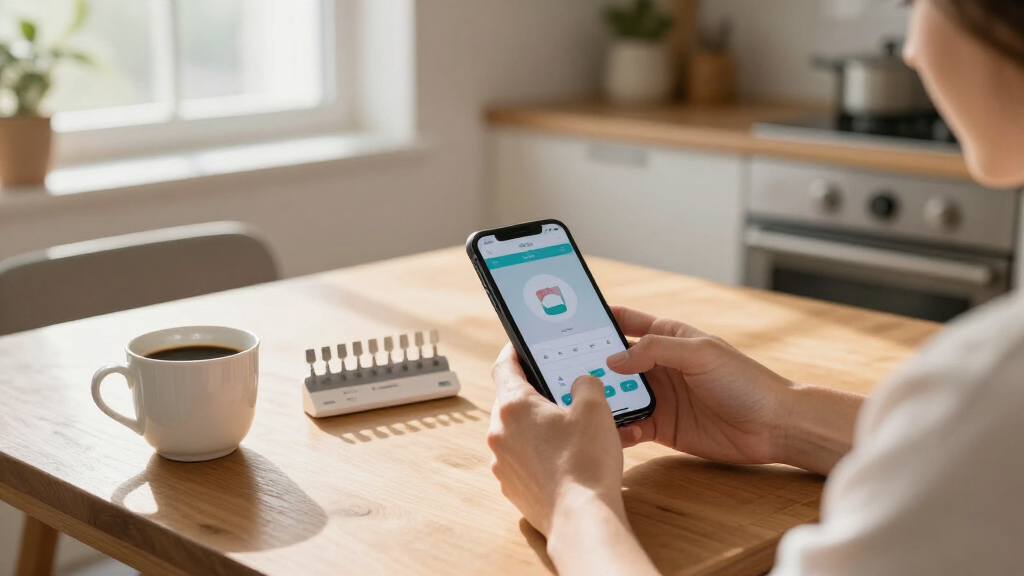
The core innovation involves a guided-lighting photo flow that captures images of teeth with a smartphone camera, then compares the shade against a calibrated dental shade scale. This process is designed to produce a quantitative score that reflects the degree of whitening, which can be tracked over weeks to monitor progress. The system also plans to plot these scores over time, identify which products are effective, and recommend solutions based on data from users with similar starting shades.
This technology aims to address a key pain point: the reliance on subjective visual assessment in bathroom mirrors, which often results in inconsistent or exaggerated perceptions of whitening. By providing an objective measurement, the app could help users make better decisions about their whitening routines, reduce unnecessary product purchases, and improve overall satisfaction. The initial testing phase involves benchmarking app-generated shade scores against dentist-standard VITA readings for at least fifty users, with the goal of establishing a strong correlation that validates the approach.
Potential Impact on Consumer Teeth Whitening Outcomes
If successful, this phone-based shade scoring system could revolutionize the home whitening market by offering an objective, easy-to-use measurement tool. Consumers would gain clearer insight into their progress, leading to more effective routines and less product waste. For companies, it opens a new revenue stream through subscription services and affiliate sales of proven whitening products. Additionally, it aligns with a broader trend toward personalized, data-driven beauty and health tech, potentially increasing consumer trust and engagement in at-home treatments.
As an affiliate, we earn on qualifying purchases.
Growing Demand for Objective Whitening Measurement Tools
The home teeth whitening industry has grown rapidly, driven by consumer demand for affordable, convenient cosmetic solutions. However, a persistent challenge remains: consumers lack a reliable way to measure actual shade change, often relying solely on visual assessment. This has led to frequent product cycling without guaranteed results, and dissatisfaction among users. Historically, professional dentists use calibrated shade guides like VITA, but these are not practical for home use. Recent advances in smartphone camera technology and guided lighting offer a promising avenue to bridge this gap, with startups and established brands exploring digital measurement tools as a way to improve outcomes and differentiate their offerings.
“Using phone cameras combined with guided lighting can approximate professional shade readings, making objective measurement feasible at home.”
— an anonymous researcher
home teeth whitening progress monitor
As an affiliate, we earn on qualifying purchases.
As an affiliate, we earn on qualifying purchases.
Validation and Accuracy of Phone-Based Shade Scores
It is not yet confirmed how closely the app’s shade scores will match professional dental readings like VITA, as validation is still underway with initial testing involving fifty users. The strength of the correlation and the app’s ability to reliably rank product effectiveness remain to be proven. Additionally, factors such as lighting conditions, camera quality, and user technique could influence accuracy, and these variables are still being studied.
smartphone teeth whitening measurement tool
As an affiliate, we earn on qualifying purchases.
As an affiliate, we earn on qualifying purchases.
Next Steps for App Validation and Market Launch
The immediate next step involves completing the benchmarking study against dentist-standard shade guides to establish accuracy and reliability. If results are favorable, developers plan to refine the app’s algorithms and user interface, then conduct broader testing with diverse user groups. Pending successful validation, a commercial version could be launched within the next year, supported by subscription models and affiliate partnerships. Further, ongoing research will explore integration with other home whitening devices and personalized recommendations based on user data.
As an affiliate, we earn on qualifying purchases.
Key Questions
How accurate is the phone shade scoring compared to professional dental assessments?
The accuracy is currently being tested, with initial studies comparing app scores to VITA shade guides. Results are pending, but the goal is to achieve a strong correlation that can reliably rank whitening progress.
Will this technology work with all smartphones?
The prototype uses guided-lighting and camera calibration to standardize image capture, but compatibility across all devices will depend on hardware capabilities. Developers aim to optimize the app for a wide range of smartphones.
How will the app help users improve their whitening results?
The app will track shade changes over time, identify which products produce the best results, and provide personalized recommendations based on user data and similar starting shades.
Is this technology available now or still in development?
The technology is currently in the testing and validation phase, with a commercial launch targeted within the next year if validation proves successful.
What are the potential limitations of phone-based shade scoring?
Factors like lighting conditions, camera quality, and user technique could affect accuracy, and ongoing research is needed to mitigate these variables.
Source: IdeaNavigator AI
Halloween Picks
halloween
As an affiliate, we earn on qualifying purchases.