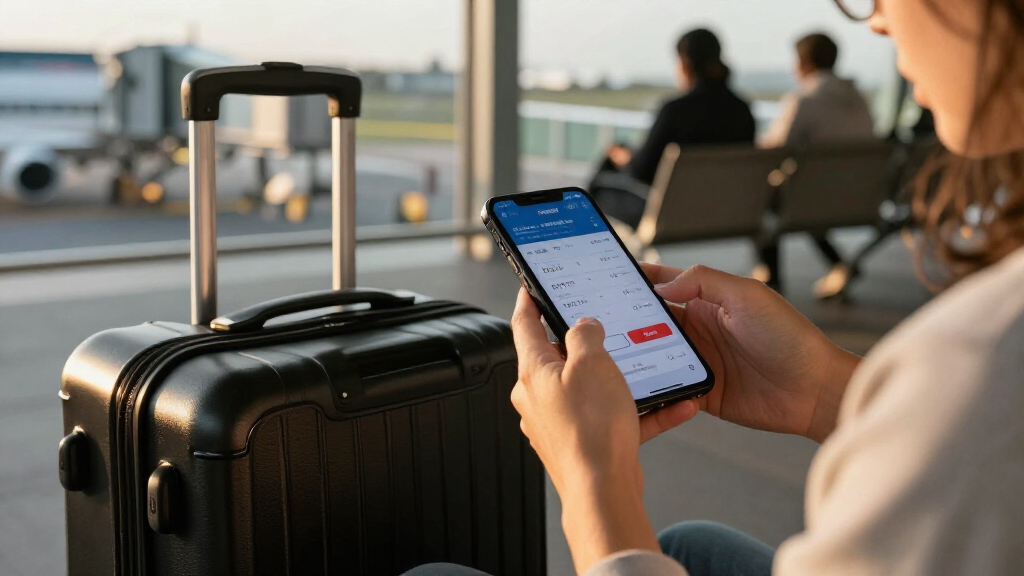

🔍 Read the full analysis: United Says Travelers Must Book Their Own Flights, Not AI Agents on ThorstenMeyerAI.com

Get smart everyday buys delivered free with Prime
- Fast, free delivery on millions of items
- Prime Video, Amazon Music and more included
- Member-only deals all year
TL;DR
United Airlines has updated its contract of carriage to prohibit unauthorized third-party AI agents from making, changing or servicing tickets and other purchases. The rule applies even when a person supervises or approves the agent’s actions; travelers can still use AI to search for flights but must complete purchases themselves, according to reporting cited in the source material.
United Airlines has barred unauthorized third-party AI agents from making, changing or servicing tickets and purchasing other products through its platforms, according to a contract revision dated November 11. The restriction applies even when a traveler supervises or approves the software, making United’s policy a direct limit on agents that attempt to complete travel bookings on customers’ behalf.
United said it is restricting access on its own website and app, as well as indirectly through travel agencies and aggregators. Its revised contract of carriage adds the use of AI agents to a list of prohibited practices. The rule covers software that searches, books, purchases, tickets, manages or otherwise services United products, including flights, seats, upgrades and partner products, according to contract language reproduced by travel-industry publications.
The contract defines an AI agent broadly as software or a service that takes autonomous or semi-autonomous action, including an AI-enabled browser or an assistant built into a consumer platform. It does not identify specific commercial products. Reports have cited Meta’s Muse and OpenAI’s tools as examples of the types of assistants that could fall within the definition, but United’s policy names no individual agent.
United’s release cited the risks of sharing account credentials with third-party assistants, unintended purchases or account changes, and possible conflicts with FAA and Department of Transportation rules. The Wall Street Journal, as cited by View from the Wing, reported that an AI assistant may still search for flights and display fares. Under that account, the traveler must complete the purchase without having the agent perform the transaction.
United draws a line on AI travel bookings
Travelers may use AI to search for United flights, but must complete purchases and manage tickets themselves under the revised contract.
Search is allowed; checkout is not
The rule covers unauthorized third-party agents, even when a traveler supervises or approves their actions.
An AI assistant may search and display fares.
The traveler must complete the purchase without the agent.
Agents also may not change or service United tickets and related purchases.
What United says is at stake
The airline cites account security, unintended actions and regulatory concerns.
Credentials and data
Sharing account access with outside assistants could expose sensitive information.
Purchases and changes
An agent could make unintended purchases, change an account or use MileagePlus miles.
FAA and DOT rules
United says automated AI actions could conflict with federal requirements.
Enforcement details remain unclear
The contract lists possible remedies, but the reported material does not explain how United will identify agent activity or apply them.
- Cancel reservations or invalidate tickets
- Charge the full ticket value
- Remove miles or end MileagePlus membership
- Which remedies United will use
- How cases will be assessed
- How existing tickets and later changes are treated
Who Controls the Final Booking
The policy draws a boundary between AI-assisted research and AI-operated transactions. Travelers may be able to use software to compare flights, but an agent cannot carry the booking through checkout or manage a ticket under the revised terms. That distinction matters for people hoping to delegate routine travel tasks, such as selecting a fare, using miles, changing a seat or handling a reservation.
The rule also introduces contractual uncertainty for travelers who let an outside tool interact with their accounts. The contract says United may cancel reservations made, modified or serviced by AI agents without notice. Other listed remedies include invalidating tickets, charging the full ticket value, removing miles or ending MileagePlus membership. The cited reporting says the terms do not spell out whether United intends to apply every listed remedy to agent bookings, or how it would identify them.
For the travel industry, United’s move is a test of how airlines will respond as companies promote software that can act for customers. Skift described United as the first U.S. airline to state such a restriction explicitly. That does not establish that other airlines will follow, and the source material indicates that companies in travel are taking different approaches to AI services.
Products Worth Considering

Samsung 32 Odyssey G5 (G51F) QHD 180Hz Gaming Monitor

Brother INKvestment 6960 Wireless Color Inkjet All-in-One Printer with 11 x 17 Capabilities and 3.5 Color Touchscreen

Canon MAXIFY GX2020 MegaTank Wireless All-in-One Color Inkjet Printer
As an affiliate, we earn on qualifying purchases.
A New Rule for Travel Agents
United announced its restrictions on November 11 and revised its contract of carriage, the terms that apply when passengers buy tickets. The reported text places AI-agent activity among prohibited practices that also include fare-related conduct such as hidden-city and throwaway ticketing. The source material says the wording was published by View from the Wing, One Mile at a Time and PPC Land; the writer supplying that material said they could not independently load United’s website, so the contract wording was checked against those reproductions.
AI agents have been promoted as tools that could carry out multi-step tasks, including arranging travel. Meta CEO Mark Zuckerberg has called travel a “top use case” for the company’s Muse agent, according to Skift. But agent-based purchasing remains limited in practice: the source material cites Uber’s count of four agent-booked rides in a week with about 320 million trips and orders. That is a raw count from a particular period, not a measure of growth or a market-wide estimate.
The source also notes differing company policies: Amazon and JPMorgan Chase have blocked outside agents, while Southwest and Expedia have worked with ChatGPT. Those examples show that the industry response is not uniform; they do not establish that those companies permit every kind of agent transaction.
““United is taking steps to restrict access — directly within our digital platforms and indirectly via travel agencies and aggregators — to prohibit use by unauthorized, third-party personal AI agents or assistants.””
— United Airlines
Enforcement and Older Tickets
How United will detect agent activity and apply the contract’s remedies is not clear from the reported language. The terms list possible consequences, including cancellation and mileage-related penalties, but the cited coverage says United has not specified whether it will use all of them for agent-made bookings or how cases will be assessed.
The source material also reports that the contract applies based on the terms in effect when a ticket is issued. On that reading, tickets issued before November 11 fall under the earlier text. United’s own explanation of how it will treat existing reservations, later changes to those tickets, or bookings made through intermediaries is not included in the material.
United’s regulatory rationale is also open to interpretation. The source cites federal requirements for airlines to provide information about hazardous materials and to obtain passenger acknowledgment in certain situations. A commentator at View from the Wing disputed the strength of United’s safety argument. The available material does not establish that regulators have ruled on United’s policy or determined whether particular agent workflows comply with the rules.
How Travelers Must Book
For now, travelers using a third-party assistant should treat it as a search and comparison tool, not as a way to complete or manage a United transaction. The reported guidance is to select and purchase the ticket themselves, rather than let the agent access an account or act on the booking.
United said its work includes updates to booking, ticketing and distribution policies, but the source material provides no schedule for further changes or a technical explanation of how access will be restricted. Further guidance from United could clarify how the rule applies to specific tools, travel-agency connections, existing reservations and post-purchase services. Until then, those details remain unresolved.
Key Questions
Can an AI assistant search for United flights?
Yes, according to reporting cited in the source material. An assistant may search for flights and display fares, but the traveler must complete the purchase themselves.
Does supervising an AI agent make a booking permitted?
No, under the reported contract language. United’s definition covers autonomous or semi-autonomous actions whether or not a passenger or another person supervises or approves them.
What could happen to a reservation made by an AI agent?
The revised terms say United may cancel reservations made, modified or serviced by AI agents without notice. The contract also lists other possible remedies, but United has not clarified in the cited material how it will apply them to these bookings.
Does the restriction apply to tickets bought before November 11, 2026?
The source material says the contract applies according to the terms in effect when a ticket is issued, suggesting tickets issued before the revision may fall under the earlier wording. United’s treatment of later changes to those tickets is not clear from the available reporting.
Source: ThorstenMeyerAI.com