
🔍 Read the full analysis: 15 Best AI Workflow Automation Tools In 2027 on ThorstenMeyerAI.com

Get smart everyday buys delivered free with Prime
- Fast, free delivery on millions of items
- Prime Video, Amazon Music and more included
- Member-only deals all year
TL;DR
This roundup ranks 15 books about AI workflow automation, with a Microsoft Power Automate guide as its recommended practical starting point. The list spans beginner and no-code learning, small-business functions, technical agent design and specialist fields; it ranks books, not software platforms, and the supplied material does not establish that these titles are new or independently tested.
A roundup of 15 books on AI workflow automation recommends Workflow Automation with Microsoft Power Automate as a practical starting point for readers working with Microsoft’s business tools. The list also includes beginner-focused, small-business and specialist guides, but it is a ranking of books—not a comparison of automation software platforms.
The ranking weighs audience fit, practical orientation, accessibility and technical depth, according to the source. It places guides with distinct intended audiences alongside each other rather than treating one approach as right for every reader. The source cautions that a book’s title alone does not establish the quality or completeness of its methods.
Hands-On AI Workflow Automation is highlighted for its no-code learning path, while AI Agents and Automation for Beginners is described as focusing on controlled agent behavior. For technical operations, Building AI Agents for Network Operations is the specialist option. The source identifies three books aimed at small-business adoption and says AI Business Automation covers marketing, sales, support, research and operations.
The remaining recommendations, in the order presented, are The AI-Powered Accountant, The AI Workflow Rescue, and eight other titles not named in the supplied source material. Because their names and individual descriptions are absent, those entries cannot be responsibly identified or assessed here. The source says The AI Workflow Rescue emphasizes human judgment and review, while The AI-Powered Accountant targets accounting workflows.
The 15 picks
- 1
 Workflow Automation with Microsoft Power AutomateView on Amazon →
- 2
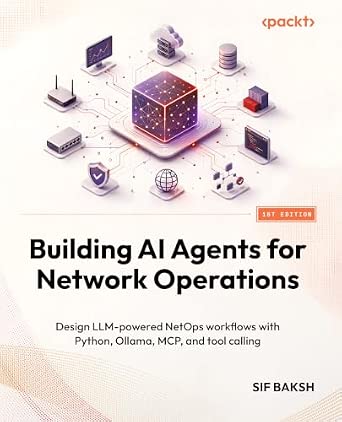 Building AI Agents for Network Operations: Design LLM-Powered NetOps Workflow…View on Amazon →
- 3
 The No-BS Guide to AI Agents & Automation: Build AI Workflows, Automate Your…View on Amazon →
- 4
 AI-Powered Automation and Workflows for Small Business OwnersView on Amazon →
- 5
 AI Agents: From Theory to Operations — A Practical Guide to Business Automati…View on Amazon →
- 6
 AI Automation: A Practical Guide to Automating Repetitive Tasks with AI Tools…View on Amazon →
- 7
 AI Business Automation: Practical Workflows for Marketing, Sales, Customer Su…View on Amazon →
- 8
 The AI Workflow Rescue: Use AI to Remove Repetitive Work Without Losing Human…View on Amazon →
- 9
 Claude AI: From Beginner to Expert — A Practical Guide to Prompt Engineering,…View on Amazon →
- 10
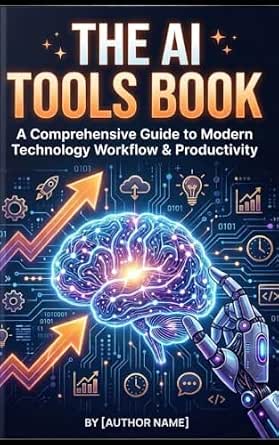 The AI Tools Book: A Practical Guide to Artificial Intelligence for Freelance…View on Amazon →
- 11
 AI Automation for Small Businesses: A Practical Guide to Saving Time, Working…View on Amazon →
- 12
 AI Agents and Automation for Beginners: Build Controlled Workflows That Obser…View on Amazon →
- 13
 Hands-On AI Workflow Automation: A Beginner-Friendly Roadmap to Eliminating R…View on Amazon →
- 14
 The AI-Powered Accountant: How to Use ChatGPT, AI Tools, and Smart AutomationView on Amazon →
- 15
 AI for Everyday Automation: 7 AI Workflows to Save Hours at Work Every WeekView on Amazon →
Choosing a Guide for Your Workflow
The list’s practical value is its distinction between breadth and specialization. Readers still deciding where AI may fit could favor a broad business guide; someone redesigning a particular accounting or network-operations process may need a narrower, more technical resource. These are differences in stated focus, not evidence that a particular approach will produce better results.
It also draws attention to human review and risk. Automating a repetitive step does not mean every later decision should happen without oversight. Before choosing a guide, readers can identify what starts a workflow, what data it uses, where its output goes and which steps could affect customers, finances or records. That can help them judge whether a no-code introduction or a specialist treatment better fits the work.
Products Worth Considering

Samsung ViewFinity UJ59 32-Inch 4K UHD Monitor

FLEXISPOT EN1 Electric Standing Desk, 48 x 24 Inches, Black

Apple iPad Air 13-inch (M4), 128GB, Wi-Fi 7, Blue
As an affiliate, we earn on qualifying purchases.
How the 15-Book Ranking Works
The source says it ordered the books by how directly their stated focus helps readers choose, design or manage AI-powered workflows. It considered beginner accessibility, the range of work addressed and technical detail. It also says a focused guide can rank ahead of a broader survey when its subject matches a particular need.
The material supplies selected titles and summary judgments, but not a complete, numbered list of all 15. It does not provide author names, publication details, independent testing methods or evidence that the books’ advice has been verified. The 2027 framing is therefore not confirmation that the books were published or reviewed in 2027.
Missing Titles and Review Details
The supplied material does not name eight of the 15 books, so a complete title-by-title list cannot be verified from it. It also does not identify authors, publication dates, editions, prices or the evidence behind individual assessments. No product tests, reader outcomes or independently measured automation results are provided.
It is also unclear whether the “2027” framing reflects a publication schedule, a planned update or simply the requested presentation year. The recommendations should not be read as confirmation that a particular book is current, technically compatible with a reader’s software or suitable for a high-stakes process.
Match the Book to the Task
Readers can start by writing down one recurring task, its trigger, the information it uses and the result it should produce. Then compare that need with a guide’s stated audience and technical level, and check whether its examples fit the tools already in use. For workflows affecting money, customers or records, plan an approval and review step before expanding automation.
A fuller version of the roundup would need to provide all 15 titles, publication information and more detail on how each recommendation was evaluated. Until then, the available material supports a comparison of the named books’ intended focus, not a complete assessment of all 15.
Key Questions
What is the top recommendation in this roundup?
The source names Workflow Automation with Microsoft Power Automate as its practical starting point, particularly for readers using Microsoft business tools. This is the roundup’s recommendation, not a finding from independent software testing.
Is this a ranking of AI automation software?
No. It ranks books about AI workflow automation, not software products or platforms. The source does not compare product features, prices or performance.
Which book is aimed at no-code learners?
The source highlights Hands-On AI Workflow Automation for its no-code learning path. It does not provide enough detail to confirm the setup requirements or technical level of every example in the book.
Does the source provide all 15 book titles?
No. It names several recommendations, including guides for Power Automate, beginners, NetOps, business automation, accounting and human review, but eight titles are missing from the supplied material.
How should readers choose an automation guide?
Start with the workflow to be changed, then match the book’s audience, technical depth and tool focus to that task. For processes with meaningful consequences, consider whether the guidance includes human approval and review.
Source: ThorstenMeyerAI.com