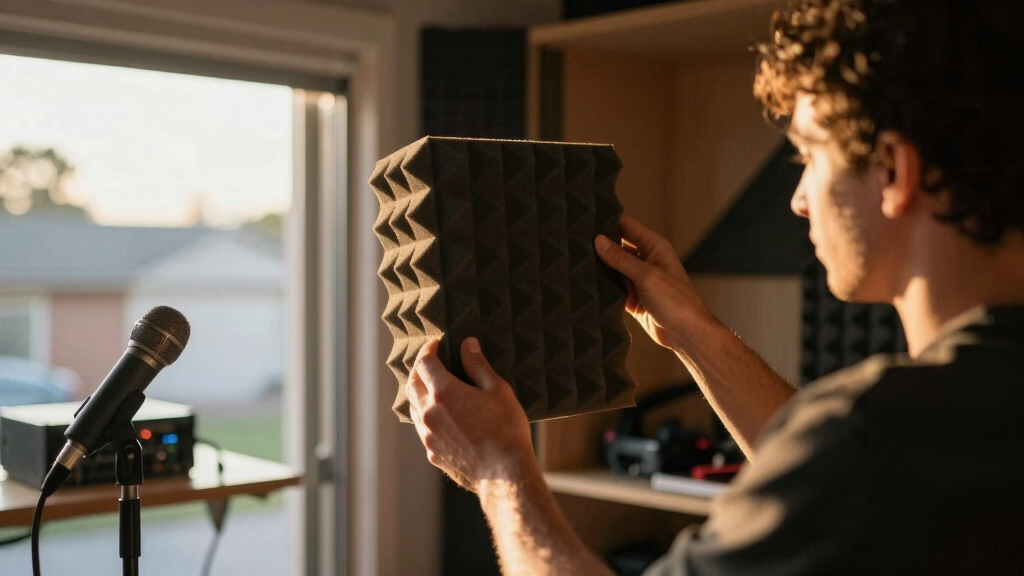

📊 Full opportunity report: Acoustic Dampening, Placement, and the “Rig in the Closet” Setup on ThorstenMeyerAI.com — validation score, market gap, and execution plan.

Get smart everyday buys delivered free — and shop member deals
- Fast, free delivery on millions of items
- Access to Prime Big Deal Days deals on October 6–7
- Prime Video, Amazon Music and more included
TL;DR
This article explains how moving AI workstations out of the workspace and using proper ventilation and acoustic strategies can significantly reduce noise. The ‘rig in the closet’ method is effective but requires careful heat management.
Placing high-power AI workstations in another room or enclosed space, such as a closet, is one of the most effective methods to reduce noise in a workspace, according to recent expert guidance.
Experts emphasize that the most effective way to minimize noise from AI workstations is to physically move the rig away from the workspace, ideally into a different room or closet. This approach leverages distance and isolation, which are more effective than acoustic foam or barriers alone.
The ‘rig in the closet’ setup involves placing the machine in a sealed or semi-sealed space, which can drastically cut noise transmission. However, this method requires careful ventilation to prevent overheating, as trapped heat can cause thermal throttling and damage the hardware. Proper airflow, either passive or active, is essential to maintain optimal temperatures.
Additional measures include using soundproof cabinets with integrated ventilation systems, rubber feet or anti-vibration pads to reduce structure-borne noise, and ensuring network connectivity for remote operation. These strategies collectively help maintain performance while keeping noise levels low.
Acoustic dampening
& the rig in the closet.
The most powerful noise fix isn’t a material — it’s a floor plan. A rig you can’t hear because it’s in another room beats any amount of foam. Tap the approaches in Part 1 to see what actually works.
(another room)
(levers 1–4)
(door / barrier)
(acoustic foam)
Contain the noise, not the heat
Impact of Placement and Ventilation on Noise Reduction
Implementing effective placement and ventilation strategies can dramatically improve workspace comfort and productivity by reducing noise pollution. For remote AI workloads, moving the rig into a separate room or closet means the loudest components do not disturb the user, which is especially advantageous in shared or home environments.
The 'rig in the closet' approach, if properly ventilated, allows for near-silent operation while managing high heat loads. This can be a game-changer for professionals working in noise-sensitive environments or home offices, enabling high-performance computing without sacrificing comfort or risking hardware damage.
acoustic soundproof cabinet for PC
As an affiliate, we earn on qualifying purchases.
As an affiliate, we earn on qualifying purchases.
Effective Noise Mitigation Techniques for AI Rigs
Traditional noise reduction methods focus on acoustic foam and barriers, which primarily address airborne noise within a room. However, these are less effective against structure-borne noise, which travels through solid objects like desks and floors.
Recent guidance from hardware and acoustics experts highlights that the most significant noise reduction comes from relocating the rig away from the workspace. This is especially relevant for AI workloads, where hardware often generates substantial heat and noise, making placement a critical factor.
Placement strategies like the 'rig in the closet' have gained popularity, but they require careful attention to ventilation to prevent overheating, as high-performance GPUs can produce over 600W of heat continuously.
"The most effective noise reduction is moving the rig into another room or closet, where distance and isolation do the heavy lifting."
— Thorsten Meyer, AI workspace expert
quiet ventilation system for high-power workstation
As an affiliate, we earn on qualifying purchases.
As an affiliate, we earn on qualifying purchases.
Uncertainties in Heat Management and Long-Term Reliability
While the benefits of moving the rig into a separate room or closet are clear, the long-term effects of sustained heat buildup in sealed or semi-sealed environments remain less documented. The optimal ventilation solutions and their effectiveness across different hardware configurations are still being studied, and cost considerations may limit adoption.
soundproof closet for computer setup
As an affiliate, we earn on qualifying purchases.
As an affiliate, we earn on qualifying purchases.
Next Steps for Implementing Quiet AI Workstation Setups
Future developments include the adoption of purpose-built soundproof cabinets with integrated cooling systems, and the refinement of ventilation techniques to optimize heat dissipation without compromising noise reduction. Users are advised to evaluate their hardware's thermal profile and ventilation options carefully before implementing a 'rig in the closet' setup.
Monitoring temperature and noise levels during operation will help determine the most effective configuration, and hardware manufacturers may release more specialized enclosures in response to demand for quiet, high-performance AI rigs.
anti-vibration pads for computer hardware
As an affiliate, we earn on qualifying purchases.
As an affiliate, we earn on qualifying purchases.
Key Questions
Is placing my AI rig in a closet safe?
It can be safe if proper ventilation is provided. Ensuring adequate airflow and temperature control is essential to prevent overheating and hardware damage.
What are the best ways to ventilate a closet for a high-power workstation?
Use active exhaust fans, passive vents, or purpose-built soundproof cabinets with integrated cooling systems. Proper ducting and temperature monitoring are also recommended.
Does moving the rig away from my workspace affect performance?
No, as long as the rig is connected via a reliable network, performance remains unchanged. The main benefit is noise reduction at your workspace.
Can I use acoustic foam instead of moving the rig?
Acoustic foam alone is less effective against structural-borne noise and does not address heat buildup. Moving the rig or providing proper ventilation is more effective.
Source: ThorstenMeyerAI.com
Fall Picks
fall essentials
As an affiliate, we earn on qualifying purchases.