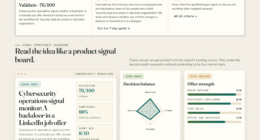

📊 Full opportunity report: How To Raise A Few Billion Dollars: The Machinery Financing The AI Buildout — And Where It Creaks on ThorstenMeyerAI.com — validation score, market gap, and execution plan.
TL;DR
The AI infrastructure buildout is financed through a complex web of debt instruments, SPVs, private credit, and collateralized loans. This machinery enables raising billions, but also introduces significant opacity and risk. The cycle’s sustainability remains uncertain.
AI infrastructure is now being financed through a multi-layered machinery involving hundreds of billions of dollars in debt, SPVs, and private credit, as companies and investors scramble to fund the world’s largest peacetime investment project. This financing system is essential to understanding how the AI buildout is progressing despite the enormous costs that even the biggest tech firms cannot cover out of pocket.
Last year alone, AI-related companies and projects tapped into at least $200 billion of investment-grade debt markets, with projections reaching $250 to $300 billion in 2026, primarily from hyperscalers and their joint ventures. Notably, AI-linked firms now constitute roughly 14% of the investment-grade bond index, surpassing US banks, indicating compute infrastructure’s central role in corporate finance.
Much of this financing occurs through the creation of special purpose vehicles (SPVs), which ring-fence assets and liabilities, allowing tech companies to offload datacenter costs and liabilities. Over the past eighteen months, more than $120 billion has been moved off balance sheets via SPV deals, including a $30 billion transaction for a Louisiana campus—the largest private-credit datacenter deal in history.
Beyond SPVs, private credit funds have become the dominant source of datacenter financing, originating over $200 billion in loans, with projections of an additional $800 billion over the next two years. These loans are typically opaque, flexible, and not traded daily, which complicates risk assessment. Meanwhile, lower-tier financing involves high-yield bonds and GPU collateralized loans, with some structures secured directly by chips and customer contracts.
The buildout is past $3 trillion, and not even the richest companies on Earth can pay for it out of pocket. So the money is being raised — through every instrument the capital markets know, and a few dusted off from 2007. To see where this cycle breaks or holds, study the paper, not the models.
▲ Opinion & analysis · not investment adviceFour layers, descending in safety and ascending in cleverness. The senior layer is the healthiest; everything below exists because it cannot carry $3 trillion alone.
How more than $120 billion left the balance sheets while everyone reported cleaner numbers.
Where I think the machinery creaks, held alongside the case for it rather than instead of it.
Not the model launches — the covenants.
is a promise about a technology that has never once held still.
Implications of the Complex Financing Machinery
This layered financing system enables the massive capital inflows necessary for the AI infrastructure buildout, which is estimated to cost over $3 trillion. However, the opacity, reliance on private credit, and complex debt structures pose risks to financial stability if the cycle stalls or faces downturns. Understanding this machinery is critical for assessing the sustainability of the AI expansion and potential systemic vulnerabilities.

Data Center Financing and Securitization: A Comprehensive Investment Guide to the Digital Infrastructure Market (The Data Center Capital Series)
As an affiliate, we earn on qualifying purchases.
As an affiliate, we earn on qualifying purchases.
Background of AI Infrastructure Financing Strategies
The AI buildout has been characterized as the largest peacetime investment project, with costs surpassing three trillion dollars, primarily for datacenters and compute capacity. Major tech firms like Amazon, Microsoft, and Meta are unable to fund this entirely from their cash flows, leading to extensive use of debt instruments, SPVs, and private credit funds. This trend accelerated over the past few years, with record-breaking SPV deals and private loans reshaping the capital markets' approach to tech infrastructure financing.
Historically, such large-scale infrastructure projects relied on public funding or bank loans, but the current cycle is dominated by private credit and innovative debt structures, which have created a new layer of financial engineering that complicates risk assessment and regulatory oversight.
"The machinery financing the AI buildout is now a complex web of layered debt, SPVs, and private credit, enabling trillions in investment but also introducing significant opacity and risk."
— Thorsten Meyer
As an affiliate, we earn on qualifying purchases.
Risks and Unknowns in the Financing Cycle
While the scale of financing is confirmed, the long-term stability of this machinery remains uncertain. The opacity of private credit loans, the potential for market downturns, and the reliance on complex debt structures like GPU collateralized loans pose systemic risks. It is not yet clear how resilient this system will be if economic conditions worsen or if key players face liquidity issues.

Wealth in Numbers: The Ultimate Dealmaker’s Guide to SPVs, Syndication, and Private Investment
As an affiliate, we earn on qualifying purchases.
As an affiliate, we earn on qualifying purchases.
Future Developments and Regulatory Oversight
Next steps include monitoring how private credit markets evolve, especially as more debt is issued at lower investment grades. Regulatory scrutiny may increase, particularly around the opacity of private loans and the use of SPVs. Additionally, the actual costs and risks of these structures will become clearer as the cycle progresses, potentially leading to adjustments in financing strategies or increased market volatility.

WisOffice 10 Pack RFID Blocking Card Entire Wallet Protection, Slim Design
- Full Wallet RFID Protection: Protects entire wallet with one card
- Blocks RFID/NFC Scanning: Prevents unauthorized contactless card scans
- No Setup or Maintenance: Instant protection without charging or setup
As an affiliate, we earn on qualifying purchases.
As an affiliate, we earn on qualifying purchases.
Key Questions
How are tech companies funding the AI infrastructure buildout?
They are primarily using layered debt instruments, including investment-grade bonds, SPVs, and private credit loans, to finance datacenter construction and compute capacity.
What role do private credit funds play in this financing system?
Private credit funds are the main providers of datacenter loans, originating over $200 billion and expected to supply more than half of global datacenter funding by 2028, often with opaque and flexible terms.
What are the risks associated with this financing machinery?
The main concerns include systemic risk from opacity, potential market downturns, and the complexity of debt structures that could lead to instability if the cycle breaks or if key players face liquidity issues.
Are banks significantly exposed to AI infrastructure financing?
Officially, banks' direct exposure is minimal—about 0.8% of assets—though they likely carry additional exposure through their lending to private credit funds, which are heavily involved in AI-related financing.
Source: ThorstenMeyerAI.com