📊 Full opportunity report: HBM Ate The Fab on ThorstenMeyerAI.com — validation score, market gap, and execution plan.
Listen free for 30 days with Audible
Thousands of audiobooks and originals — cancel anytime.
Start your free trialAs an affiliate, we earn on qualifying purchases.
TL;DR
HBM has rapidly grown from a niche tech to a key component in AI and graphics cards, consuming a large share of wafer capacity and driving a worldwide RAM shortage. This shift impacts supply and prices across memory markets.
High Bandwidth Memory (HBM) has become the dominant memory technology, causing a global shortage of RAM and graphics cards. This shift is driven by its critical role in AI accelerators and high-performance GPUs, with production constraints and soaring demand intensifying the shortage.
Since 2026, HBM has transitioned from a specialized component to the primary memory type used in leading AI accelerators and high-end GPUs. Major manufacturers like SK Hynix, Samsung, and Micron have all qualified and ramped production of the latest HBM4 and HBM4E generations, with capacities sold out through 2026. Nvidia’s Rubin platform, featuring multiple stacks of HBM4, exemplifies this shift. The manufacturing process for HBM is highly complex and wafer-intensive, with each stack consuming three to four times the wafer area of standard DDR5 memory, severely limiting overall supply. As a result, the HBM market, valued at approximately $35 billion in 2025, is projected to grow to $100 billion by 2028, accounting for nearly half of all DRAM revenue in 2026. This demand has led to shortages in conventional RAM and GPUs, impacting consumers and industries reliant on these components.
HBM ate the fab
The thing the factories make instead of your RAM is a tower of stacked memory bolted to every AI chip. In three years it went from niche part to the component that sets the price of nearly all the world’s memory — and now a chunk of its GPUs.
A tower, not a sheet
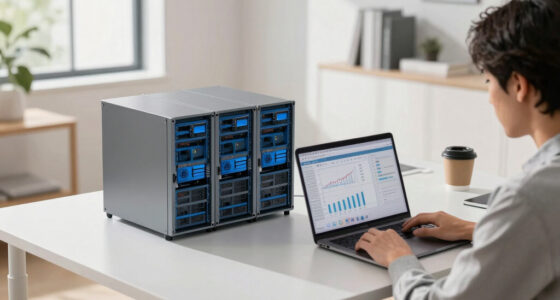
HBM stacks DRAM dies vertically, links them with thousands of through-silicon vias, and sits beside the GPU to deliver 5–10× the bandwidth of normal graphics memory. AI is bandwidth-bound — without it, the world’s most expensive silicon sits starved for data. But stacking is inefficient: one HBM bit eats 3–4× the wafer area of DDR5, and one defect can ruin a whole tower.
≈ 8 HBM stacks wrap every AI GPUThis isn’t artificial scarcity — AI really is bandwidth-bound, HBM really is the fix, and it really does eat 3–4× its weight in fab capacity. The discomfort is structural: one component, coupled to one customer’s demand, now sets the price of nearly all memory and a slice of GPUs. The market is now $35B → ~$100B by 2028, ~41% of all DRAM revenue (was 8% in 2023), and sold out through 2026. The one hope: with all three suppliers finally racing on HBM4, competition can add supply. The matching risk: if AI demand corrects, HBM is where it breaks first. Next: DDR5 now, DDR6 soon.
Impact of HBM-Driven Memory Shortage on Global Supply
The dominance of HBM in the memory market is reshaping supply chains and pricing for RAM and GPUs. With nearly 50% of DRAM revenue tied to HBM and capacity fully booked through 2026, manufacturers prioritize HBM production over standard memory, leading to shortages and increased prices for consumers and industries dependent on these components. This trend underscores a shift in the semiconductor landscape, with HBM’s growth influencing overall industry dynamics.
High Bandwidth Memory HBM4 modules
As an affiliate, we earn on qualifying purchases.
As an affiliate, we earn on qualifying purchases.
Rapid Rise of HBM and Market Concentration
Historically, HBM was a niche product, but since 2023, it has become central to AI and high-performance graphics. SK Hynix led the market, supplying most HBM3E chips, with Nvidia heavily reliant on it for its AI accelerators. Samsung and Micron have also ramped up production, with all three qualifying for the latest HBM4 generation in 2026. The technology’s manufacturing complexity—large dies, TSVs, and low yields—has driven wafer consumption, making HBM the most wafer-hungry product in fabs. This concentration of supply among few manufacturers has caused a tight market and rising prices, fueling the ongoing shortage.
“We have qualified and ramped production of HBM4, meeting the high demand from our key clients.”
— Samsung spokesperson

GIGABYTE GeForce RTX 3050 WINDFORCE OC V2 6G Graphics Card, 2X WINDFORCE Fans, 6GB GDDR6 96-bit GDDR6, GV-N3050WF2OCV2-6GD Graphics Card
- NVIDIA Ampere Architecture: NVIDIA Ampere Streaming Multiprocessors
- Enhanced Ray Tracing: 2nd Generation RT Cores
- Advanced AI Performance: 3rd Generation Tensor Cores
As an affiliate, we earn on qualifying purchases.
As an affiliate, we earn on qualifying purchases.
Unresolved Aspects of the HBM Shortage
While capacity constraints are clear, the exact timeline for alleviating the shortage remains uncertain. It is not yet confirmed how quickly manufacturers will increase yields or introduce new processes to expand supply. Additionally, the impact on lower-tier memory markets and consumer products is still developing, with some industry analysts questioning whether alternative solutions could mitigate the shortage.

AI Systems Performance Engineering: Optimizing Model Training and Inference Workloads with GPUs, CUDA, and PyTorch
As an affiliate, we earn on qualifying purchases.
As an affiliate, we earn on qualifying purchases.
Upcoming Production Milestones and Market Adjustments
Manufacturers are expected to continue ramping HBM4 and HBM4E production through 2026 and 2027, potentially easing shortages later in the year. Industry observers will monitor yield improvements, new fab investments, and whether alternative memory technologies gain traction. Consumers and industries should prepare for continued high prices and limited availability of RAM and high-end GPUs until supply stabilizes.

Lenovo 32GB TruDDR4 Memory Module
- Brand and Model: Lenovo 4ZC7A08709
- Memory Capacity: 32 GB
- Memory Arrangement: Single 32 GB Module
As an affiliate, we earn on qualifying purchases.
As an affiliate, we earn on qualifying purchases.
Key Questions
Why is HBM causing a RAM shortage?
Because HBM manufacturing consumes significantly more wafer area and has lower yields, it diverts capacity from standard RAM production, leading to shortages and higher prices across memory markets.
When will the HBM shortage ease?
It is uncertain; while capacity is increasing, yield improvements and new fab investments are needed, and shortages may persist into 2027 or beyond.
How does HBM impact GPU prices?
Since HBM is a key component in high-end GPUs, limited supply and high costs of HBM drive up GPU prices, especially for AI and professional graphics cards.
Are there alternatives to HBM for high-performance memory?
While alternatives like GDDR6 and GDDR7 exist, they do not match HBM’s bandwidth and efficiency, making HBM indispensable for certain AI and high-performance applications.
Will the HBM market grow further?
Yes, with projections indicating the market will reach around $100 billion by 2028, driven by AI, data centers, and high-end graphics applications.
Source: ThorstenMeyerAI.com
Pool season Picks
robotic pool cleaners
As an affiliate, we earn on qualifying purchases.